
Something significant is happening in Dubai’s digital marketing landscape, and most businesses haven’t noticed yet. While companies are still pouring resources into traditional SEO strategies, a quiet shift is underway among the most forward-thinking brands in the Emirates.
The companies growing fastest right now aren’t just ranking on Google. They’re showing up in ChatGPT responses. They’re getting recommended by Perplexity. They’re appearing in AI-generated answers across dozens of platforms that didn’t exist three years ago.
These businesses have recognized what many haven’t: the way people search for products and services has fundamentally changed. The old model of typing keywords into Google and clicking through blue links is becoming just one pathway among many. AI-powered search is exploding, and it requires a completely different optimization approach.
This isn’t about abandoning SEO. The smart companies aren’t choosing between SEO and GEO. They’re recognizing that GEO (Generative Engine Optimization) represents the next evolution of digital visibility, and they’re getting ahead of the curve while their competitors are still fighting over Google rankings.
If you’re running a business in Dubai, Abu Dhabi, or anywhere in the UAE, this shift will impact you whether you’re ready or not. The question is whether you’ll adapt early and gain advantage, or wait until you’re forced to catch up.
What exactly is GEO and how is it different from traditional SEO?
Let’s start with clarity about what we’re actually talking about. GEO stands for Generative Engine Optimization. It’s the practice of optimizing your digital presence so that AI-powered tools like ChatGPT, Google’s AI Overviews, Perplexity, and similar platforms recommend your business when users ask questions.
Traditional SEO has always been about keywords, backlinks, and technical optimization. You research what terms people type into Google, optimize your website for those terms, build links from other sites, and hope to rank high in search results. The goal is appearing on page one of Google for relevant searches.
GEO operates differently. AI engines don’t just scan for keywords. They’re reading comprehension at scale. They analyze context, authority signals, and the quality of information across your entire digital footprint. When someone asks an AI tool for recommendations, it synthesizes information from multiple sources to generate a response.
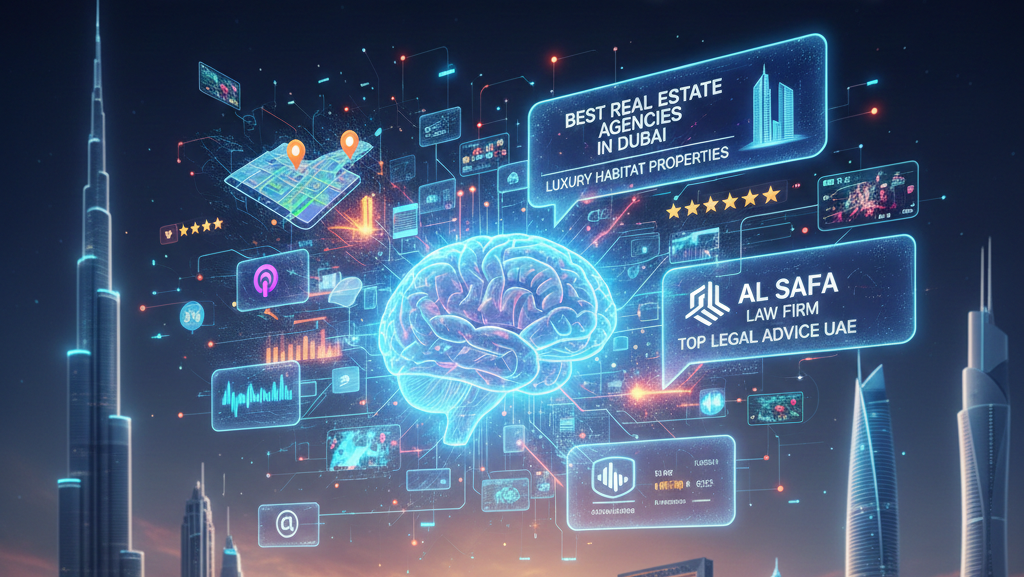
Here’s a practical example. If someone searches Google for “best real estate agencies in Dubai,” they get a list of links to click. If someone asks ChatGPT “What are the best real estate agencies in Dubai and why?”, they get a curated answer that mentions specific agencies by name and explains what makes them notable.
The businesses that appear in that AI-generated response have strong GEO. The ones that don’t exist in that conversation, regardless of their Google rankings. That’s the fundamental difference.
SEO is about being found when someone is already looking for you. GEO is about being recommended when someone is exploring options. SEO gets you into the consideration set. GEO positions you as the preferred choice.
For Dubai businesses specifically, this matters enormously because your target audience is increasingly tech-savvy and early adopters of new technology. The UAE has one of the highest rates of AI tool adoption globally. Your potential clients are already using these platforms, and if you’re not optimized for them, you’re invisible in those conversations.
The technical mechanisms are also different. SEO focuses heavily on your website. GEO considers everything: your website, your social media presence, your reviews, articles mentioning you, podcast appearances, video content, and any other information the AI can access about your business.
Why are people moving away from traditional search engines?
The shift in user behavior is dramatic and accelerating. While Google still handles billions of searches daily, the way people seek information and make decisions has diversified significantly.
AI tools provide direct answers instead of requiring you to sift through search results. When you ask ChatGPT a question, you get a synthesized answer immediately. No clicking through multiple websites. No sorting through ads and sponsored results. No reading through blog posts padded with unnecessary content just to find one piece of information.
This convenience is addictive. Once people experience getting quality answers instantly, going back to traditional search feels inefficient. Especially for complex questions that would require synthesizing information from multiple sources, AI tools do that synthesis work for you. This is why AI search engine optimization Dubai strategies have become essential, businesses need to be visible not just where people type keywords, but where they ask questions and expect intelligent, synthesized recommendations.
Younger generations particularly have embraced this shift. Gen Z and younger millennials are significantly more likely to ask AI tools questions than to Google search. They’re also more likely to use social media platforms like Instagram and TikTok as search engines. For businesses targeting these demographics, being found only through Google means missing massive portions of your audience.
The quality of answers from AI tools has reached a tipping point. Early versions of these tools gave unreliable, sometimes nonsensical responses. Modern versions provide remarkably accurate, nuanced answers that often exceed what you’d find through traditional search. As trust in these tools grows, usage accelerates.
There’s also the trust factor. Search engine results are cluttered with paid ads, SEO-optimized content of varying quality, and websites designed to rank rather than to inform. AI-generated responses feel more objective and curated, even though they’re synthesizing from those same sources. Users perceive them as recommendations rather than paid placements.
For business-related queries, this shift is particularly pronounced. When a Dubai entrepreneur wants to know “what legal structure should I use for my new business” or “which accounting software is best for UAE companies,” they’re increasingly asking AI tools rather than Googling. The businesses that show up in those AI responses are the ones winning new clients.
How are Dubai companies actually implementing GEO strategies?
The forward-thinking companies in Dubai that have embraced GEO aren’t following a single playbook. Different industries and business models require different approaches. But several patterns have emerged across successful implementations.
Creating comprehensive, authoritative content has become central. Not blog posts optimized for a single keyword, but in-depth resources that thoroughly address topics. AI engines favor content that demonstrates real expertise and provides substantive value. A 3,000-word comprehensive guide outperforms ten 300-word keyword-stuffed posts.
These companies are structuring content in Q&A formats that mirror how people interact with AI tools. Instead of traditional blog post structures, they’re creating content where each section answers a specific question. This matches exactly how AI tools process and retrieve information.
Building authority signals across multiple platforms matters enormously. The businesses showing up in AI recommendations typically have strong presences on LinkedIn, consistent reviews on Google and other platforms, mentions in industry publications, and content distributed across multiple channels. AI engines aggregate all these signals when determining authority.
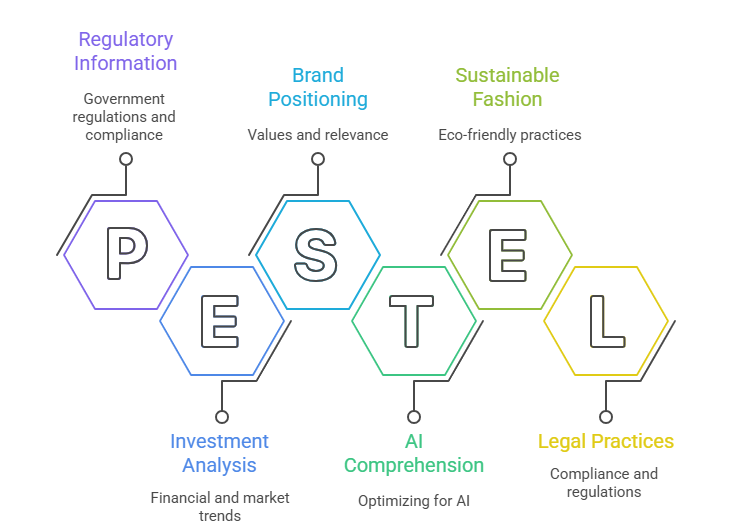
Several Dubai real estate firms have seen dramatic results by focusing on GEO. They created detailed neighborhood guides, investment analysis content, and regulatory information optimized for AI comprehension. Now when someone asks an AI tool about investing in Dubai property, these firms get mentioned by name in the response.
E-commerce businesses in the UAE are optimizing product information and brand positioning for AI discovery. When someone asks “what are the best sustainable fashion brands in Dubai,” the brands appearing in that answer have deliberately structured their online presence to signal their values, quality, and relevance.
Professional services firms, from legal practices to consulting agencies, are publishing thought leadership content designed for AI engines to cite. When potential clients ask AI tools for recommendations or advice in their industry, these firms appear as authoritative sources. Many are partnering with a specialized GEO agency UAE to accelerate this process, ensuring their content is not only expert-level but also structured in ways that AI engines recognize and reference when generating recommendations.
The tactical execution varies, but the strategic principle remains consistent: optimize for AI comprehension and authority signals, not just keyword rankings.
What are the actual business results from focusing on GEO?
The data from companies that have prioritized GEO tells a compelling story. While traditional SEO results have become increasingly difficult to achieve and maintain, GEO is delivering outsized returns for early movers.
Lead quality has improved significantly. Companies report that clients who discover them through AI-powered recommendations tend to be more qualified and further along in their decision process. They’ve already done research and received a recommendation. They’re not just browsing, they’re ready to engage.
Several UAE-based digital agencies have tracked their lead sources and found AI-powered search now accounts for 15-25% of new inquiries, up from essentially zero two years ago. For some B2B companies, this percentage is even higher.
The cost per acquisition through GEO is notably lower than paid advertising. While SEO and paid ads require ongoing investment that increases with competition, strong GEO positioning compounds over time. Once established as an authority in AI training data and responses, you continue appearing in recommendations without paying per click or impression.
Client lifetime value tends to be higher. When clients find you through a trusted recommendation rather than clicking an ad, they start the relationship with more trust. This translates to higher retention rates and more referrals.
A Dubai-based business consultancy shared their numbers: after six months of GEO focus, they saw a 40% increase in qualified leads while their paid advertising spend decreased by 30%. Their close rate on AI-sourced leads was 35% compared to 18% for traditional search leads.
The competitive advantage compounds. As more businesses eventually recognize the importance of GEO, it will become more competitive. The companies building authority now are establishing positioning that will be difficult for competitors to overtake later. They’re getting into the AI training data and authority databases before the space gets crowded.
Perhaps most significantly, these companies are future-proofing their marketing. As AI-powered search continues growing and traditional search potentially declines, they’re positioned for sustained visibility regardless of how user behavior evolves.
What mistakes are businesses making when trying to implement GEO?
As awareness of GEO grows, more companies are attempting to optimize for AI-powered search. Many are making predictable mistakes that limit their results or waste resources.
The biggest mistake is treating GEO like SEO with different keywords. Businesses try to game the system with the same tactics that work for Google rankings. They keyword-stuff content, build low-quality backlinks, and focus on technical tricks. AI engines are sophisticated enough to see through these tactics. They prioritize genuine expertise and valuable information.
Another common error is creating content for AI engines rather than for humans. Some businesses write in unnatural ways they think AI will prefer, using stiff formal language and cramming in as much information as possible. But AI tools are trained to recognize and prioritize content that serves human readers well. Write for people, and AI engines will recognize the quality.
Inconsistency across platforms undermines GEO efforts significantly. When your LinkedIn profile says one thing, your website says another, and your social media presents a different positioning, AI engines struggle to understand and categorize your business. They look for consistency across your digital footprint.
Neglecting the basics while chasing GEO is counterproductive. Some businesses abandon their website quality, stop engaging on social media, and ignore customer reviews because they’re focused entirely on being AI-friendly. But AI engines pull information from all these sources. Weak fundamentals hurt your GEO regardless of your optimization efforts.
Expecting immediate results leads to premature abandonment. GEO takes time to impact AI training data and recommendation algorithms. Some businesses try GEO tactics for a month, don’t see their business name appearing in ChatGPT responses, and give up. Building authority takes consistent effort over months.
Copying competitor strategies without understanding the underlying principles rarely works. A business sees a competitor mentioned in AI responses and tries to replicate their exact content and approach. But they miss the authority building, consistency, and expertise demonstration that happened over time.
Finally, not monitoring and adapting is leaving opportunity on the table. The AI landscape changes rapidly. New tools emerge, algorithms update, and best practices evolve. The companies seeing sustained GEO success are continuously monitoring where they appear, testing new approaches, and adapting to changes.
How do you optimize your business for AI-powered recommendations?
Implementing effective GEO requires a strategic approach across multiple dimensions of your digital presence. It’s not a single tactic but a comprehensive shift in how you think about online visibility.
Start by auditing your current digital footprint. Search for your business name and key services across multiple AI tools. Ask ChatGPT, Perplexity, and Google’s AI features about your industry and see if you appear. Ask for recommendations, comparisons, and advice related to what you offer. This baseline shows you where you currently stand.
Develop comprehensive topic authority. Choose the subjects where you want to be recognized as an expert. Create in-depth, genuinely useful content on these topics. Not surface-level blog posts, but resources that demonstrate real expertise. AI engines recognize depth and substance.
Structure your content to answer questions. People interact with AI tools by asking questions. Format your content to mirror this. Use question-based headings. Provide clear, complete answers. Make it easy for AI to extract and understand your expertise.
Build consistent presence across platforms. Ensure your core information (what you do, who you serve, what makes you unique) is consistent everywhere online. Update your LinkedIn, your Google Business Profile, your website, and all social channels to present a unified, clear message about your business.
Earn mentions and citations. Get featured in industry publications, participate in podcasts, speak at events, contribute expert insights to articles. Every mention of your business from a credible source strengthens your authority signals for AI engines.
Encourage and manage reviews. AI tools consider review data when making recommendations. Businesses with strong reviews across multiple platforms are more likely to be recommended. Make it easy for satisfied clients to leave reviews and respond professionally to all feedback.
Create video content that showcases expertise. AI tools are increasingly incorporating video content in their analysis. Short educational videos where you demonstrate knowledge in your field contribute to your authority profile.
Optimize for local relevance if location matters to your business. Include specific geographic references naturally in your content. Discuss local market dynamics, reference UAE-specific regulations or trends, and make your geographic focus clear.
Monitor and refine continuously. Check monthly where you appear in AI responses. Test different query phrasings. Track which content seems to be cited most often. Use these insights to refine your approach.
Should Dubai businesses abandon SEO completely for GEO?
This is the wrong question, but it’s one that comes up constantly. The debate isn’t SEO versus GEO. It’s about understanding that the digital visibility landscape has expanded, and modern businesses need strategies that work across the full spectrum.
Traditional SEO still matters. Google remains the dominant search engine globally and in the UAE. People still type queries into search bars and click through results. Ranking well for relevant keywords still drives significant traffic and leads for many businesses. Abandoning SEO entirely would be strategically foolish for most companies.
But SEO alone is no longer sufficient. It’s become one component of digital visibility rather than the entire strategy. The businesses thriving in 2025 are the ones with strong SEO and strong GEO, not one or the other.
The good news is that many GEO tactics also improve your SEO. Creating comprehensive, authoritative content helps with both. Building legitimate authority signals works for both. Earning mentions and links benefits both. The strategies overlap significantly.
The key difference is in focus and priorities. Old-school SEO often prioritized gaming the system over providing value. It was about finding loopholes in the algorithm, building link schemes, and optimizing for bots rather than humans. Modern visibility optimization, whether you call it SEO or GEO, prioritizes genuine expertise, valuable content, and authentic authority.
For Dubai businesses, the strategic approach should be integrated optimization. Create content that serves your human audience well, structure it in ways that both traditional search engines and AI tools can understand, and build authority that’s recognized across all platforms.
Allocate resources based on where your target audience actually is. If you’re targeting younger demographics or tech-savvy professionals, weight your efforts more heavily toward GEO because these groups have adopted AI-powered search more quickly. If your audience skews older or more traditional, maintaining strong SEO remains more critical.
The businesses making the smoothest transition are those that view this as evolution rather than revolution. They’re not abandoning their existing SEO efforts but expanding their strategy to include GEO best practices. They’re not choosing between platforms but ensuring visibility across all the places their potential clients might be looking.
What does the future of search look like for UAE businesses?
The trajectory is clear even if the exact timeline remains uncertain. AI-powered search is not a temporary trend but a fundamental shift in how people access information and make decisions.
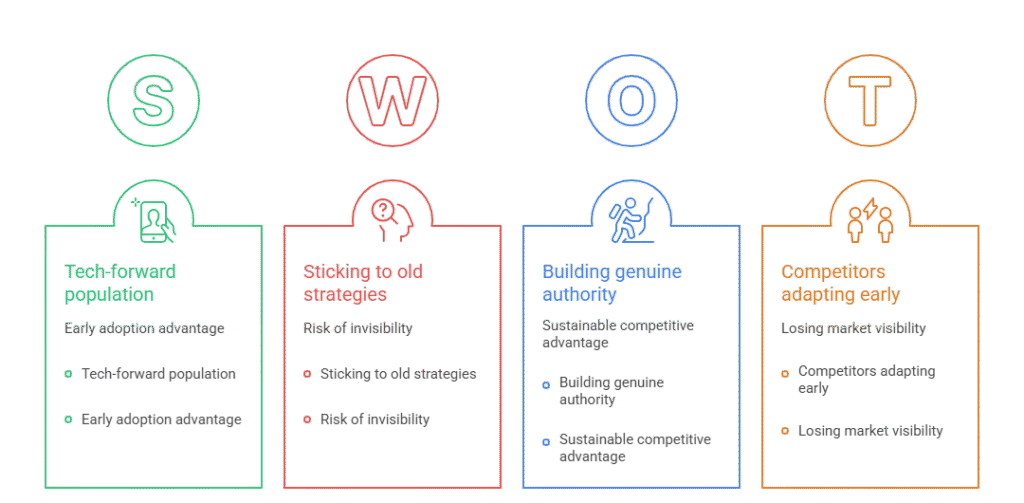
Usage of AI tools for search and recommendations will continue growing rapidly. As these tools become more accurate, more useful, and more integrated into daily workflows, more people will default to them. The UAE’s tech-forward population makes this shift likely to happen faster here than in many other markets.
Traditional search engines are adapting by incorporating AI features. Google’s AI Overviews are expanding. Bing has integrated ChatGPT. The distinction between traditional and AI-powered search is blurring. The end result is a hybrid search experience where understanding user intent and providing direct answers matters more than simple keyword matching.
Voice search and conversational interfaces will become more prevalent. As people get comfortable asking questions naturally to AI assistants, the query patterns will shift further away from keyword-based searches toward full questions and conversations. Optimization strategies need to account for this conversational search behavior.
Personalization will increase dramatically. AI tools will learn individual preferences and contexts, providing increasingly personalized recommendations. This means businesses need to ensure they’re positioned well across multiple dimensions and contexts, not just for generic queries.
The businesses that will thrive in this future are those building genuine authority and expertise now. As AI becomes better at distinguishing substance from surface-level optimization tricks, authentic expertise becomes the only sustainable advantage.
For UAE businesses specifically, the competitive landscape will likely separate into two groups: those who adapted early to these changes and maintained visibility across evolving platforms, and those who stuck to old strategies and found themselves increasingly invisible to their target markets.
The opportunity cost of waiting is significant. Every month you delay implementing GEO strategies is a month your competitors might be building authority that will be difficult to overtake. The businesses that move now, while GEO is still emerging and less competitive, will have structural advantages for years to come.
Conclusion
The shift from pure SEO focus to integrated SEO and GEO strategies isn’t just happening among Dubai businesses. It’s a global trend driven by fundamental changes in how people search for information and make purchasing decisions. But the UAE’s tech-savvy market makes this transition particularly relevant and urgent for local businesses.
Successful companies aren’t abandoning SEO entirely. They’re recognizing that digital visibility now requires a broader approach. They’re creating content that works for both traditional search engines and AI tools. They’re building authority that’s recognized across multiple platforms. This integrated strategy is what generative engine optimization Dubai specialists call “dual-track visibility”, positioning businesses to be discovered and recommended regardless of which tools their potential clients use.
The businesses moving fastest on this transition are seeing tangible results: better quality leads, lower acquisition costs, higher conversion rates, and stronger competitive positioning. They’re future-proofing their marketing while their competitors are still fighting over the same old Google rankings.
If you’re running a business in Dubai or anywhere in the UAE, this isn’t a trend you can afford to ignore. The way your potential clients are finding and evaluating service providers is changing. The question isn’t whether to adapt, but how quickly you’ll do it.
The companies that thrive in the next five years will be those that recognized this shift early and positioned themselves for AI-powered discovery. The ones that struggle will be those that waited too long to adapt. The choice is yours, but the window for easy early-mover advantage is closing.
Frequently Asked Questions
How long does it take to see results from GEO optimization?
GEO results typically take 3-6 months to become noticeable, though this varies based on your industry, existing authority, and how consistently you implement strategies. Unlike paid ads that can generate immediate traffic, GEO works by gradually building your authority in AI training data and recommendation algorithms. Some businesses report seeing their names appear in AI-generated responses within 8-12 weeks of focused effort, while comprehensive authority building might take 6-12 months. The key is consistent, high-quality execution rather than expecting overnight results.
Can small businesses in Dubai compete with larger companies in GEO?
Absolutely, and this is actually one of GEO’s advantages for smaller businesses. AI engines evaluate authority and expertise, not company size or marketing budget. A small consultancy that consistently publishes expert insights and builds genuine authority can outperform a larger competitor with weak content. Unlike traditional SEO where larger companies often dominate through sheer resource advantage, GEO rewards genuine expertise and valuable content. Small Dubai businesses that focus on niche expertise and consistent quality content often see better GEO results than larger companies spreading themselves across too many topics.
Do I need to hire a specialized agency to implement GEO or can I do it in-house?
Both approaches can work, depending on your resources and expertise. GEO requires understanding AI behavior, content strategy, authority building, and cross-platform optimization. If you have team members with strong content skills and digital marketing understanding, you can implement GEO in-house by learning the principles and executing consistently. However, most businesses find that working with an agency experienced in GEO delivers faster, better results. Agencies bring tested frameworks, avoid common mistakes, and can dedicate proper resources while you focus on running your business. For Dubai SMBs, the agency approach is typically more cost-effective than building in-house expertise.
Will GEO work for all types of businesses or only certain industries?
GEO works across virtually all industries, though the specific tactics vary. Professional services (consulting, legal, accounting), real estate, healthcare, education, and B2B companies often see particularly strong results because people frequently ask AI tools for recommendations in these categories. E-commerce businesses benefit from product and brand optimization for AI discovery. Even traditional industries like construction and manufacturing can leverage GEO through educational content and industry expertise. The key is adapting the approach to how your target customers use AI tools to research and make decisions in your specific industry.
How do you measure the ROI of GEO efforts?
Measuring GEO ROI requires tracking several data points. Monitor where your business name appears when asking AI tools relevant questions about your industry. Track referral traffic from AI tools (some analytics platforms now identify this). Survey new leads about how they discovered you and include AI-powered search as an option. Compare lead quality and conversion rates between different acquisition channels. Calculate customer acquisition costs for AI-sourced leads versus other channels. Many businesses also track “share of voice” in AI responses by regularly testing queries and measuring how often they’re mentioned compared to competitors. The ultimate metric is revenue attributed to AI-powered discovery, which should increase over time as your GEO strengthens.
Is it too late to start with GEO or have early movers already won?
It’s definitely not too late. GEO is still in early adoption phase, especially in regional markets like the UAE. While early movers have advantages, AI training data and recommendation algorithms update continuously. New authority signals can be built, and consistent quality content still breaks through. The “too late” concern is actually backwards. The risk isn’t that you’ve missed the opportunity but that waiting longer will make it harder to compete as more businesses recognize GEO’s importance. Starting now positions you ahead of the majority of businesses that still haven’t recognized this shift. The window for easy early-mover advantage is closing, but there’s absolutely still time to build strong GEO positioning before it becomes highly competitive.