
Hiring a digital marketing agency in Dubai should feel like finding a strategic partner, not signing a contract with a black box. Yet most businesses make this decision based on impressive portfolios, confident sales pitches, and vague promises of growth. Then six months later, they’re stuck paying for services that deliver no measurable results.
The problem isn’t always the agency. It’s that most businesses don’t ask the right questions before committing. They focus on price, portfolio, and personality instead of process, proof, and priorities. This guide walks you through exactly what to ask before hiring any agency, the red flags that signal trouble, and how to spot partners who will actually move your business forward.
Why Most Businesses Hire the Wrong Agency
The average business owner in the UAE talks to three or four agencies before making a decision. They sit through presentations, review case studies, and compare pricing. But they rarely dig into the questions that reveal whether an agency can actually deliver.
Here’s what usually happens. An agency shows you a beautiful website they built for another client. They talk about reach, engagement, and brand awareness. They promise a strategy tailored to your business. You sign the contract, and then reality sets in. The strategy is generic. The results are vague. When you ask for specifics, you get dashboards full of metrics that don’t tie to revenue.
This happens because most businesses evaluate agencies based on surface-level factors instead of asking hard questions about methodology, accountability, and alignment. The agencies that sound impressive in meetings aren’t always the ones that deliver in execution.
Questions About Strategy and Approach
How do you define success for clients like us?
This question reveals whether the agency thinks in terms of business outcomes or vanity metrics. A good answer should mention revenue, lead quality, conversion rates, or customer acquisition cost. A weak answer focuses on impressions, followers, or traffic without tying those metrics to actual business growth.
If an agency can’t articulate how their work connects to your bottom line, they’re not thinking strategically. They’re executing tactics without understanding what success looks like for your business.
What does your discovery process look like?
Agencies that skip discovery are guessing. A solid process includes auditing your current marketing, researching your competitors, understanding your target audience, and identifying gaps in your positioning or messaging.
Ask what information they need from you, how long the discovery phase takes, and what deliverables you’ll receive. If the answer is vague or nonexistent, that’s a red flag. Strategy without research is just opinions dressed up as expertise.
How do you stay current with platform changes and algorithm updates?
Digital marketing changes constantly. Google updates its algorithm. Instagram shifts how it prioritizes content. AI search engines like ChatGPT and Perplexity are reshaping how people find businesses. If an agency is still relying on tactics from 2023, they’re already behind.
Ask about their process for staying informed. Do they test new platforms? Do they adapt strategies based on data? If they can’t explain how they’re evolving with the market, they’ll leave you stuck with outdated tactics while competitors move ahead.
For businesses serious about future-proofing their visibility, understanding how Generative Engine Optimization in Dubai works is no longer optional. Agencies that aren’t prioritizing AI search visibility are missing a massive opportunity.
Questions About Results and Accountability
Can you show me real results from clients in our industry or with similar goals?
Case studies are easy to cherry-pick. Anyone can show their best work. What you need to know is whether they’ve delivered results for businesses like yours, with challenges like yours, in markets like yours.
Ask for specifics. What was the client’s starting point? What did the agency implement? What were the measurable outcomes? If they can’t provide concrete numbers or won’t share detailed examples, they either don’t have strong results or they’re hiding something.
What metrics do you track, and how often do you report them?
Transparency separates good agencies from bad ones. You should know exactly what’s being measured, why those metrics matter, and how often you’ll see updates.
Monthly reports are standard, but ask what’s included. Are they showing you surface-level data like page views and post reach, or are they tracking lead volume, cost per acquisition, and conversion rates? If reporting feels like a chore for them instead of a core part of the service, that’s a problem.
What happens if we’re not seeing results after three months?
This question tests accountability. A confident agency will have a clear answer. They’ll explain their process for diagnosing issues, adjusting strategy, and getting back on track. A weak agency will deflect, blame external factors, or tell you that marketing takes time without offering solutions.
Good agencies know that not every tactic works immediately, but they also know how to pivot when something isn’t delivering. If they can’t explain how they handle underperformance, you’ll be stuck paying for strategies that don’t work.
Questions About Team and Execution
Who will actually be working on our account?
Sales teams are polished. Account managers are personable. But the people who pitch you aren’t always the people who execute. Ask who will handle strategy, content creation, ad management, and reporting.
Find out how experienced they are, how many other clients they’re managing, and whether you’ll have consistent access to them. If your account is being handed off to junior team members while senior strategists focus elsewhere, you’re not getting what you paid for.
How do you handle communication and feedback?
Misaligned expectations around communication kill agency relationships. Some businesses want weekly check-ins. Others prefer monthly updates. Some want direct access to the team. Others are fine with structured touchpoints.
Ask how often you’ll hear from them, what channels they use, and how quickly they respond to questions or concerns. If their communication style doesn’t match your needs, frustration is inevitable.
Do you work with freelancers or contractors, or is everything handled in-house?
There’s nothing inherently wrong with agencies using contractors, but you should know. If they’re outsourcing content creation, design, or development, ask who those partners are and how quality is managed.
In-house teams often provide more consistency and accountability. Contractor-heavy models can work, but only if the agency has strong processes for vetting and managing external talent.
For businesses that need high-quality web development in Dubai, knowing who’s actually building your site matters. A hand-off to an unknown contractor is very different from working with an experienced in-house team.
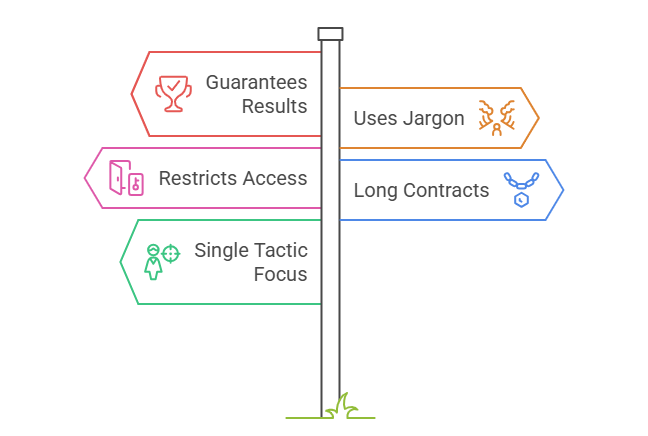
Red Flags That Signal You Should Walk Away
Not every agency is a good fit, and some aren’t worth considering at all. Here are the warning signs that should make you pause or move on.
They guarantee specific rankings or results
No legitimate agency can guarantee you’ll rank number one on Google or that your content will go viral. These outcomes depend on too many variables outside their control. Agencies that promise guaranteed results are either inexperienced or dishonest.
What they can guarantee is effort, process, and responsiveness. If they’re making bold promises without caveats, they’re setting you up for disappointment.
They use jargon without explaining what it means
Good agencies educate. They explain their process in terms you understand. If someone is throwing around buzzwords like “synergy,” “omnichannel engagement,” or “disruptive growth hacking” without breaking it down, they’re either trying to sound smart or they don’t actually know what they’re doing.
Ask them to explain their approach in simple language. If they can’t, that’s a red flag.
They won’t give you access to your own accounts or data
Your Google Ads account, Facebook Business Manager, Google Analytics, and any other marketing platforms belong to you. An agency should set these up in your name and give you full access.
If they insist on keeping ownership or restrict your access, they’re locking you in. When you decide to leave, you’ll lose all your data and have to start from scratch. This is unacceptable.
Their contract is heavily weighted toward long lock-in periods
Six-month or twelve-month contracts aren’t inherently bad, but be cautious of agencies that require long commitments with no performance benchmarks or exit clauses. If they’re confident in their work, they shouldn’t need to trap you in a contract.
Ask about cancellation terms, notice periods, and what happens if results don’t materialize. Agencies that resist these conversations are more focused on protecting their revenue than delivering value.
They focus exclusively on one tactic or platform
Marketing isn’t one-dimensional. A social media agency in Dubai that only does Instagram ads won’t help if your audience is searching on Google. An SEO-only agency won’t solve your lead generation problem if your website doesn’t convert.
Look for agencies that understand how different channels work together and can recommend a balanced approach based on your goals. If they’re only selling one service, they’re either inexperienced or incentivized to push you toward what they know, not what you need.
Questions About Pricing and Value
What’s included in your pricing, and what costs extra?
Some agencies quote a low monthly retainer but charge separately for ad spend, content creation, design work, or tools. Others bundle everything into one price. Make sure you understand exactly what you’re paying for.
Ask for a detailed breakdown. What services are included? What’s billed separately? Are there setup fees, minimum ad spends, or additional costs for revisions? Transparency here prevents surprises later.
How do you determine the right budget for paid advertising?
If the agency recommends paid ads, ask how they calculate budget. A good answer is based on your goals, average cost per lead, and conversion rates. A weak answer is a generic percentage of revenue or a flat monthly amount with no justification.
They should be able to explain how much you need to spend to generate meaningful results and what happens if the budget is too low to compete effectively.
What’s your process for scaling or adjusting services?
Your needs will change. Maybe you start with content and SEO, then add paid ads later. Maybe you need more support during a product launch. Ask how flexible they are and whether scaling up or down requires renegotiating your entire contract.
Agencies that make adjustments difficult are more focused on their own revenue stability than your business outcomes.
How to Compare Agencies Without Getting Overwhelmed
Once you’ve asked these questions to multiple agencies, you’ll have a clearer picture of who’s serious and who’s just selling. Here’s how to compare them effectively.
Create a simple scorecard. Rate each agency on strategy clarity, proof of results, team expertise, communication style, and pricing transparency. This removes emotion from the decision and helps you see which agency truly aligns with your needs.
Don’t let price be the deciding factor. The cheapest option is rarely the best. Focus on value. What will this agency deliver, and how will it impact your business? A slightly more expensive agency that drives real growth is far better than a cheap one that wastes your time.
If you’re exploring how different strategies like SEO and AI search optimization compare, GEO vs SEO which strategy gives better results in 2026? breaks down the differences so you can evaluate what agencies are prioritizing.
What to Do After You Hire an Agency
Hiring the right agency is only the first step. Once you’ve signed the contract, set clear expectations.
Schedule a kickoff meeting to align on goals, timelines, and deliverables. Establish how often you’ll communicate and what success looks like in the first 90 days. Make sure both sides understand what’s expected.
Don’t disappear after onboarding. Stay engaged. Review reports. Ask questions. Provide feedback. The best agency relationships are collaborative, not transactional.
And if things aren’t working after a reasonable period, address it. Have an honest conversation about what’s not delivering and what needs to change. Good agencies will listen and adjust. Bad ones will make excuses.
FAQ
How long should I expect to wait before seeing results from a digital marketing agency?
It depends on the tactics. Paid ads can generate leads within weeks. SEO and content marketing typically take three to six months to show meaningful traction. AI search optimization is newer, so timelines vary. Any agency promising instant results is overselling.
Should I hire a full-service agency or specialists for each channel?
Full-service agencies work well if you need integrated strategy across multiple channels. Specialists are better if you have one clear priority, like fixing your website or scaling paid ads. For most SMBs in the UAE, a full-service digital marketing agency in the UAE provides better coordination and fewer hand-offs.
What’s a reasonable monthly budget for working with a digital marketing agency in Dubai?
Retainers typically range from AED 5,000 to AED 25,000+ per month, depending on scope and agency size. Smaller agencies or freelancers may charge less but offer fewer services. Larger agencies charge more but bring more resources. Budget also depends on whether paid ad spend is included or billed separately.
How do I know if an agency is actually doing the work or just sending generic reports?
Ask detailed questions about their process. Request access to your marketing accounts so you can verify activity. Review their reports for specificity—generic summaries are a red flag. Schedule regular check-ins to discuss what’s being implemented and why.
Can I switch agencies mid-contract if things aren’t working?
Check your contract terms. Some agencies allow cancellation with 30 or 60 days’ notice. Others lock you in for the full term. If results are consistently poor and the agency isn’t responsive, document everything and explore exit options. Most reputable agencies will work with you if things aren’t aligned.
What should I prioritize if I can only afford one service right now?
Focus on the channel that directly drives leads for your business. For service businesses, that’s often a high-converting website paired with either SEO or paid ads. If your website doesn’t convert, fix that first. If you’re invisible online, start with search visibility. Avoid spreading budget too thin across channels that don’t generate revenue.
Stop Settling for Agencies That Don’t Deliver
Hiring a digital marketing agency shouldn’t feel like a gamble. The right questions eliminate guesswork and reveal which agencies have the expertise, accountability, and alignment to actually grow your business.
Most agencies will sound convincing in a sales meeting. The difference shows up in how they answer tough questions, what proof they provide, and how transparent they are about process and pricing. Agencies that avoid specifics, overpromise results, or resist accountability aren’t worth your time.
Do the work upfront. Ask hard questions. Watch for red flags. And choose an agency that treats your business like it matters, because it does.