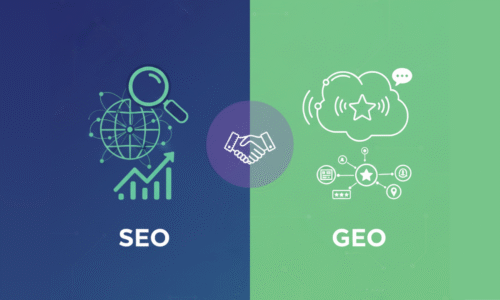

The rules of search are changing faster than most UAE businesses realize. When a potential customer asks ChatGPT, Perplexity, or Google’s AI Overviews about “best digital marketing agency in Dubai” or “how to increase online sales,” they’re not scrolling through ten blue links anymore. They’re getting one confident answer, synthesized from across the web.
If your website isn’t built to feed these AI engines the right signals, you’re invisible in this new landscape. Traditional SEO focused on keywords and backlinks. Generative Engine Optimization (GEO) requires something different: structured authority, conversational relevance, and content that directly answers the questions your customers are actually asking.
For service businesses across Dubai, Abu Dhabi, and the wider UAE, this shift isn’t coming. It’s here. The businesses that adapt now will own the AI-powered search results. The ones that don’t will wonder why their competitors suddenly dominate every customer conversation.
What is AI-powered search and why does it matter for UAE businesses?
AI-powered search means platforms like ChatGPT, Google Gemini, Perplexity, and Bing’s Copilot generate direct answers instead of just listing websites. When someone searches “affordable web design Dubai,” these engines scan thousands of sources, synthesize the information, and present a single, confident response, often with specific recommendations.
For UAE businesses, this creates both a challenge and an opportunity. The challenge: you’re no longer competing for rankings on page one. You’re competing to be the source these AI engines cite and recommend. The opportunity: smaller businesses with better-structured, more authoritative content can leapfrog larger competitors who haven’t adapted yet.
According to recent research, over 40% of online searches now involve some form of AI-generated response. In tech-forward markets like the UAE, where smartphone penetration exceeds 95% and digital adoption is among the highest globally, that percentage is likely even higher. If your content isn’t optimized for these engines, you’re missing nearly half your potential audience.
How do I structure content so AI engines can understand it?
AI engines don’t read websites the way humans do. They scan for patterns, structure, and clear signals of authority. Your content needs to speak their language while remaining valuable to human readers.
Start with clear, hierarchical structure. Use H1, H2, and H3 tags consistently. Every page should have one H1 that clearly states the topic, followed by H2 sections that break down specific subtopics. Within those, H3 tags can handle detailed points. This hierarchy helps AI engines map your content logically.
Schema markup is non-negotiable. This structured data vocabulary tells search engines exactly what your content represents. For a Dubai restaurant, schema markup identifies your business name, location, hours, menu items, and reviews in a format AI can instantly parse. For a service business, it clarifies what you offer, where you operate, and how customers can reach you. Implementation is technical but straightforward. Most modern website platforms offer plugins or built-in tools.
Create FAQ sections on every service page. AI engines love direct question-and-answer formats because they mirror how users actually search. Instead of a generic “Services” page, include sections like “How much does social media management cost in Dubai?” or “What results can I expect from content marketing in three months?” Answer these questions thoroughly, with specific details.
Use bullet points and numbered lists for complex information. When explaining your process, pricing tiers, or service benefits, break it down visually. AI engines prioritize content that’s easy to extract and present to users.
What kind of content do AI engines prefer to cite?
AI engines favor authoritative, comprehensive, and recent content that directly addresses user intent. They’re looking for sources they can confidently recommend without hedging.
Start with depth over breadth. A 2,000-word guide on “How to choose a web developer in the UAE” that covers every relevant consideration will outperform ten shallow 200-word posts. AI engines want to provide complete answers, so they gravitate toward resources that thoroughly explore topics.
Include data and specific examples. When you write “Our clients typically see a 40% increase in qualified leads within the first quarter,” that’s more credible than “We help businesses grow.” If you can reference case studies, especially from UAE companies, you’re building authority these engines recognize.
Update content regularly. AI engines timestamp information and prioritize recent sources. A blog post from 2020 about social media strategies is less useful than one from this year. Schedule quarterly reviews of your key pages and refresh statistics, examples, and insights.
Address multiple aspects of a topic. For a post about Instagram marketing, don’t just cover posting frequency. Discuss content types, optimal posting times for UAE audiences, story strategies, reel best practices, engagement tactics, and analytics interpretation. Comprehensive coverage signals expertise.
Original research and unique perspectives matter more than ever. If every marketing agency website in Dubai says the same thing about SEO, AI engines have no reason to cite you specifically. Share your actual process, your unique approach, or insights from your client work that competitors can’t replicate.
How should I use keywords for both traditional search and AI engines?
Keywords remain important, but the strategy has evolved. AI engines understand context and intent, not just exact phrase matches.
Focus on conversational, long-tail keywords. People don’t type “web design Dubai” into ChatGPT. They ask “What should I look for when hiring a web designer in Dubai for my restaurant?” or “How much does a business website cost in the UAE?” Build content around these natural questions.
Use semantic variations naturally throughout your content. Instead of repeating “digital marketing Dubai” fifteen times, vary it: “digital marketing services in Dubai,” “online marketing for UAE businesses,” “Dubai-based digital agencies.” AI engines understand these phrases are related and reward natural language over keyword stuffing.
Include location-specific terms contextually. For UAE businesses, mention emirates, neighborhoods, and local business contexts where relevant. “Businesses in Dubai Marina often need different web solutions than those in Sharjah’s industrial areas” provides geographic context while remaining useful.
Answer the “people also ask” questions. When you Google your target keywords, you’ll see related questions that real users search. Create content that directly addresses these. They represent the questions AI engines will try to answer, so providing clear responses positions you as the source.
Don’t force keywords where they don’t fit. AI engines penalize awkward phrasing and obvious manipulation. Write for humans first, then review to ensure your target terms appear naturally in headings, opening paragraphs, and throughout the content.
What role do E-E-A-T signals play in AI-powered search?
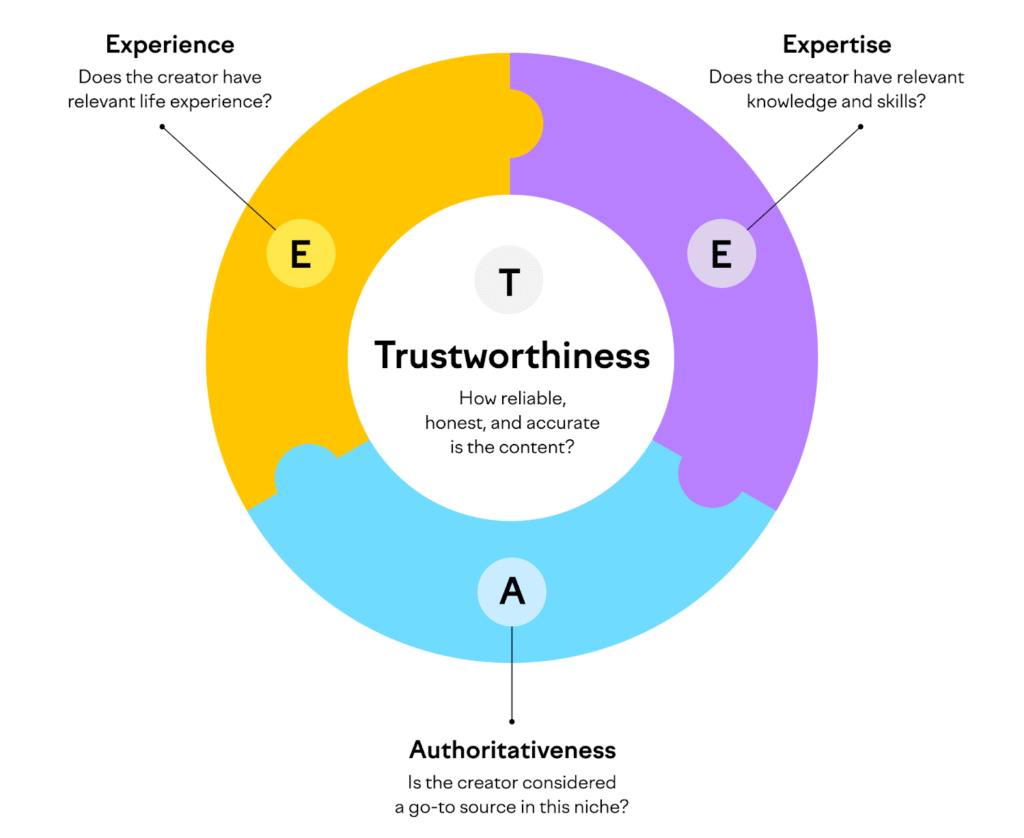
Experience, Expertise, Authoritativeness, and Trustworthiness (E-E-A-T) have become the foundation of how AI engines evaluate sources. These aren’t just SEO concepts anymore. They’re the criteria that determine whether an AI recommends your business or your competitor.
Experience means demonstrating you’ve actually done what you’re talking about. For a digital marketing agency, this includes case studies with specific results, screenshots of campaigns, client testimonials with real names and companies, and process documentation that only someone with hands-on experience could provide. Generic advice doesn’t cut it.
Expertise requires showcasing your knowledge depth. Author bios matter more than ever. If your blog posts are written by “Admin” or have no attribution, you’re losing credibility. Create author pages with qualifications, experience, and links to other published work. For service pages, detail your team’s certifications, years of experience, and specialized skills.
Authoritativeness comes from external validation. When other reputable websites link to your content, mention your company, or cite your insights, AI engines take notice. This means you need a backlink strategy, but quality trumps quantity. One link from a respected UAE business publication is worth more than fifty from random directories.
Trustworthiness involves transparency and credibility markers. Display your business registration details, physical address, and contact information prominently. Include clear privacy policies and terms of service. Show real client reviews from platforms like Google. For UAE businesses, having a .ae domain and local business listings adds trust signals.
How can I make my content more conversational for AI platforms?
AI engines prefer content that mirrors how humans actually communicate. This is especially important for voice searches and chatbot interactions, which are inherently conversational.
Write in second person when addressing the reader. “You should consider mobile optimization” feels more natural than “Businesses should consider mobile optimization.” It creates a dialogue rather than a lecture.
Use shorter sentences and paragraphs than you might in traditional business writing. While depth is important, walls of text are harder for both humans and AI to parse. Aim for 2-3 sentences per paragraph for online content, with occasional longer paragraphs when explaining complex points.
Include transitional phrases that create natural flow. “Here’s why this matters,” “Let’s break this down,” “The challenge is,” and “What does this mean for you?” These phrases signal shifts in topic and help AI engines understand content structure.
Answer implied follow-up questions. When you explain a concept, anticipate what someone would ask next. If you discuss website loading speed, the natural next question is “How do I check my website speed?” Address it immediately. This creates comprehensive, useful content that AI engines want to recommend.
Avoid jargon unless you immediately define it. Your UAE audience includes both technical and non-technical business owners. When you must use industry terms like “conversion rate optimization” or “meta descriptions,” briefly explain what they mean in practical terms.
What technical optimizations help AI engines crawl and understand my site?
Even brilliant content won’t help if AI engines can’t access and process it effectively. Technical optimization creates the foundation for visibility.
Ensure your site loads quickly. Page speed affects both user experience and how thoroughly AI crawlers explore your site. Compress images, minimize code, use browser caching, and consider a content delivery network (CDN) with UAE servers for local audiences. Google’s PageSpeed Insights tool provides specific recommendations.
Make your site mobile-responsive. In the UAE, over 70% of web traffic comes from mobile devices. If your site doesn’t work seamlessly on phones, you’re losing both human visitors and crawler efficiency. Test across different devices and screen sizes.
Create and submit an XML sitemap. This file tells search engines and AI crawlers exactly which pages exist on your site and how they’re organized. Most website platforms generate these automatically, but you need to submit them through Google Search Console and Bing Webmaster Tools.
Fix broken links and crawl errors. When AI crawlers encounter 404 errors or redirect chains, they may abandon their exploration of your site. Regularly audit for technical issues using tools like Screaming Frog or your website platform’s built-in diagnostics.
Implement breadcrumb navigation. This shows users (and crawlers) exactly where they are in your site structure. For a service page, breadcrumbs might show: Home > Services > Web Design > E-commerce Development. This hierarchical clarity helps AI engines understand relationships between pages.
Use descriptive, keyword-rich URLs. Instead of “yoursite.com/page123,” use “yoursite.com/services/social-media-management-dubai.” Clean, readable URLs provide context before AI engines even read the page content.
How do I optimize for local AI search results in the UAE?
Local optimization for AI engines requires specific strategies beyond traditional local SEO. When someone asks an AI “Who’s the best web designer near me in Dubai?” you want to be the recommended answer.
Claim and optimize your Google Business Profile completely. This isn’t just for map rankings anymore. AI engines pull heavily from these profiles for local recommendations. Fill out every field: services offered, business hours, service areas, business description, and attributes. Add photos regularly, respond to reviews, and keep information current.
Create location-specific content pages. If you serve multiple emirates, create dedicated pages for each: “Digital Marketing Services in Dubai,” “Digital Marketing Services in Abu Dhabi,” and so on. Don’t just duplicate content and swap city names. Include specific details about the local business environment, challenges unique to that area, and case studies from clients in that location.
Get listed in UAE business directories and platforms. While random directory links don’t help much, being present on legitimate UAE business platforms like Dubai Chamber, Abu Dhabi Chamber, and industry-specific directories adds local credibility signals.
Use local schema markup. Beyond general business schema, implement LocalBusiness schema that specifies your service areas, locations, and local contact information. For businesses with physical locations, include accurate coordinate data.
Build local backlinks and mentions. Partner with other UAE businesses for content collaboration, sponsor local events, contribute to UAE business publications, and engage with local business communities. When AI engines see your business mentioned alongside other established UAE companies, it reinforces your local authority.
Encourage and respond to Google reviews in detail. When you get a review, respond thoughtfully with specific references to the customer’s experience. These detailed interactions provide rich, local content that AI engines can extract and understand.
What mistakes should UAE businesses avoid when optimizing for AI search?
The shift to AI-powered search has created new pitfalls that even experienced marketers stumble into. Avoiding these mistakes can give you a significant advantage.
Don’t rely on thin, AI-generated content. The irony is real: using AI to generate shallow content that you hope AI engines will recommend rarely works. These platforms are sophisticated enough to recognize generic, low-value content. If you use AI writing tools, use them as starting points that you heavily edit, personalize, and enhance with your actual expertise.
Avoid keyword stuffing in an attempt to “game” AI engines. These systems analyze natural language patterns. Content that reads awkwardly because you’ve forced keywords into every sentence will be deprioritized. Write naturally first, then ensure your target terms appear in strategic places like headings and opening paragraphs.
Don’t neglect the user experience while chasing technical optimization. Page speed matters, but not if you’ve stripped away all visual appeal and functionality. AI engines increasingly factor in user engagement signals. If people immediately leave your site because it’s difficult to use, that hurts your visibility.
Stop ignoring mobile users. If your site requires pinching, zooming, or horizontal scrolling on a phone, you’re failing both users and AI crawlers. In the UAE market especially, mobile-first design isn’t optional.
Don’t overlook the importance of fresh content. A website that hasn’t been updated in two years signals abandonment. You don’t need daily blog posts, but regular updates to key pages, new case studies, and current examples keep your site relevant in AI rankings.
Avoid making claims you can’t back up. If you say you’re “the leading digital agency in Dubai” without any evidence, AI engines will favor competitors who demonstrate their claims with data, testimonials, and concrete results.
How can I measure success in AI-powered search visibility?
Traditional SEO metrics like keyword rankings still matter, but measuring AI-powered search visibility requires additional approaches.
Monitor traffic from AI platforms directly. In your analytics, you can identify referral traffic from ChatGPT, Perplexity, and other AI platforms. Track this separately from traditional search traffic to understand how your AI optimization efforts are performing.
Track brand mentions and citations. Use tools like Google Alerts, Mention, or Brand24 to monitor when your business name appears online, even without a direct link. When AI engines cite sources, they don’t always link back, but the mention still indicates authority.
Measure increases in direct traffic and branded searches. As AI engines recommend your business, more people will search for your company name directly or type your URL. This branded traffic indicates successful AI visibility.
Analyze the types of queries bringing users to your site. Are you attracting visitors with informational long-tail queries that suggest AI referrals? Look for increases in question-based searches and detailed queries in your search console data.
Survey new customers about how they found you. Simply asking “How did you hear about us?” can reveal when prospects discovered your business through AI-powered searches or recommendations, even if the analytics don’t clearly show it.
Monitor engagement metrics. If your AI optimization is working, you should see improvements in time on page, pages per session, and reduced bounce rates. AI engines tend to send more qualified traffic because they pre-match user intent with your content.
What content formats work best for AI-powered search optimization?
Different content formats serve different purposes in AI-powered search visibility. A strategic mix helps you appear across various query types.
Comprehensive guides and how-to articles form your foundation. These 1,500-3,000 word pieces should thoroughly cover important topics in your industry. For a digital marketing agency, this might include “The Complete Guide to Social Media Marketing for UAE Businesses” or “How to Build a Lead Generation Website in Dubai.”
FAQ pages and dedicated Q&A content perform exceptionally well. Create standalone FAQ pages for major service areas, and include FAQ sections on every service page. Format these with proper schema markup so AI engines can easily extract question-answer pairs.
Case studies with specific results provide the evidence AI engines look for. Don’t create generic “We helped Company X succeed” case studies. Detail the challenge, your specific approach, quantifiable results, and lessons learned. Include metrics, timelines, and direct quotes from clients.
Comparison and versus content helps capture decision-stage queries. “React vs. Vue for Business Websites,” “In-House Marketing vs. Agency: What UAE SMBs Should Choose,” and similar comparisons address questions people ask AI when making decisions.
List-based articles work well when they provide genuine insights. “10 Website Design Mistakes UAE Businesses Make” is fine if each point offers real value and specific guidance. Avoid shallow listicles that don’t educate.
Video content with transcripts serves dual purposes. Create videos explaining concepts, showcasing your process, or presenting case studies. Always include full transcripts on the page so AI engines can process the content.
Conclusion
Optimizing for AI-powered search isn’t about gaming algorithms or finding shortcuts. It’s about creating genuinely valuable content that directly addresses what your customers need to know, structured in ways that both humans and AI engines can understand and trust.
For UAE businesses, this shift presents an unusual opportunity. The market is sophisticated and digitally mature, but many competitors haven’t adapted to GEO yet. By implementing these strategies now, you can establish authority that compounds over time as AI search continues growing.
Start with your core service pages. Ensure they’re comprehensive, well-structured, and include natural question-based headings. Add detailed FAQ sections. Then expand to supporting content that demonstrates your expertise across various topics your customers care about.
The businesses that will dominate AI-powered search results aren’t necessarily the biggest or most established. They’re the ones providing the clearest, most authoritative, most helpful content. That’s a competition any UAE business can win with the right approach.
FAQs
How long does it take to see results from AI search optimization?
Most businesses start seeing measurable improvements in 2-4 months, but this varies based on your starting point and competition level. Unlike traditional SEO where changes can take 6-12 months to fully manifest, AI engines tend to discover and incorporate updated content more quickly. However, building genuine authority with comprehensive content, backlinks, and consistent updates is still a medium-term investment. UAE businesses in less competitive niches may see results faster than those in crowded sectors like real estate or general consulting.
Do I need to hire a developer to implement these optimizations?
Not necessarily. Many optimizations like improving content structure, adding FAQ sections, and writing more comprehensive articles require no technical skills. Schema markup and mobile responsiveness might need developer help depending on your website platform, but most modern systems like WordPress offer plugins that simplify implementation. The technical optimizations are important but should follow content improvements, not replace them. Focus first on what you can control directly.
Can small businesses compete with larger companies in AI-powered search?
Absolutely, and sometimes more effectively. AI engines prioritize relevance and authority over brand size. A small Dubai-based agency with detailed, experienced-based content about serving local SMBs can outrank a multinational with generic content. What matters is demonstrating genuine expertise in your specific area. Smaller businesses often have advantages here because they can be more specific, more personal, and more responsive to their exact audience needs.
Should I stop traditional SEO and focus only on AI optimization?
No. AI-powered search optimization and traditional SEO overlap significantly. Good content structure, keyword research, mobile optimization, and backlink building benefit both. The differences are additions, not replacements. You need conversational content, enhanced E-E-A-T signals, and FAQ formats for AI engines, but these also improve traditional search performance. Think of GEO as an evolution of SEO, not a completely separate discipline.
How often should I update my content for AI engines?
Major service pages should be reviewed and refreshed every 3-6 months. Update statistics, add new examples, refresh case studies, and ensure all information reflects current best practices. Blog content can remain evergreen longer, but plan quarterly audits of your top-performing posts to keep them current. In fast-moving industries like digital marketing, more frequent updates maintain your authority. The goal isn’t changing content for the sake of change, but ensuring everything you publish remains accurate and valuable.
What if my competitors copy my optimized content approach?
Let them. Your real competitive advantage isn’t your content structure or keyword strategy, it’s your actual experience and expertise. Competitors can copy your FAQ format, but they can’t copy your specific client results, your unique process insights, or your team’s accumulated knowledge. Focus on creating content only you could create based on your real work with real clients. That’s what AI engines ultimately reward, and it’s what will differentiate you even if others adopt similar formats.