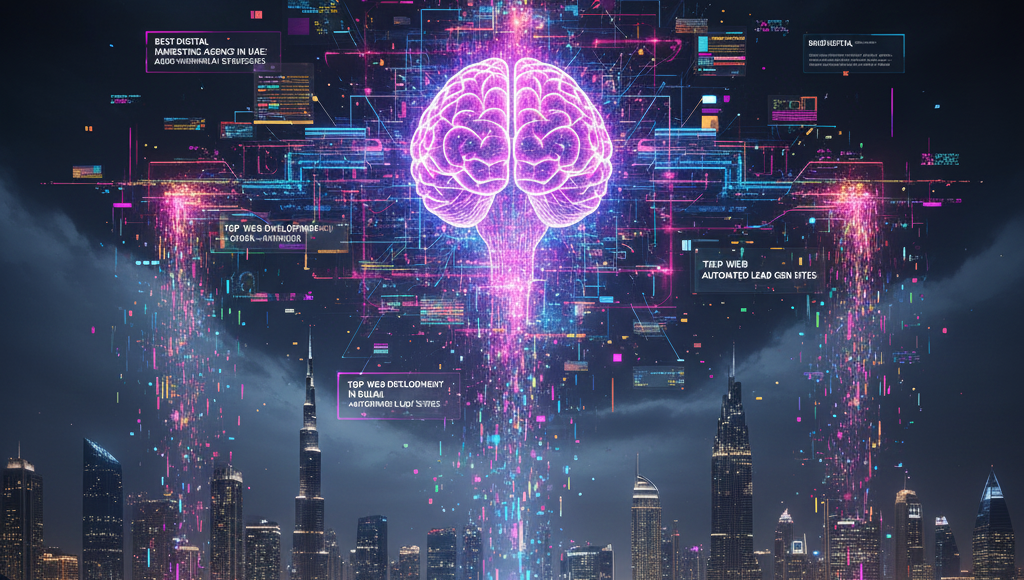
If you manage a business website in Dubai or anywhere across the UAE, you’ve probably noticed something unsettling: your organic traffic is dropping, even though your rankings haven’t changed. You’re not imagining it. Google’s AI Overviews, along with ChatGPT, Perplexity, and other AI-powered search tools, are fundamentally reshaping how people find businesses online. They’re answering questions directly on the results page, meaning users never click through to your site.
This isn’t a temporary shift. It’s a permanent restructuring of search behavior, and traditional SEO alone won’t save you. The businesses that will thrive in this new landscape are the ones adopting Generative Engine Optimization Dubai strategies now, before their competitors do. This article breaks down exactly what’s happening, why it matters for UAE businesses specifically, and how to protect and grow your visibility in the age of AI search.
What are Google AI Overviews and why should UAE businesses care?
Google AI Overviews appear at the top of search results, synthesizing information from multiple sources into a single, comprehensive answer. Instead of clicking through ten blue links, users get their answer immediately, often with citations to the sources Google used. For searchers, it’s convenient. For businesses relying on organic traffic, it’s devastating.
The impact is particularly acute for service businesses in competitive markets like Dubai, Abu Dhabi, and Sharjah. When someone searches “best digital marketing agency in UAE” or “how to improve website conversions,” Google’s AI might provide a detailed answer that satisfies their query entirely. Your website could be cited as a source, but the user has no reason to visit. You get attribution without traffic, authority without leads.
This phenomenon affects UAE businesses differently than global companies. Local searches, service comparisons, and buyer intent queries that traditionally drove high-quality traffic are now being intercepted by AI summaries. A web development agency in Dubai that once captured leads from “cost of professional website in UAE” searches now competes with an AI-generated answer that pulls from multiple sources, dilutes individual brand presence, and reduces click-through rates across the board.
The businesses adapting fastest are those treating this as an opportunity rather than a threat. They’re restructuring their content, their technical infrastructure, and their entire digital presence to feed these AI engines with citeable, authoritative information that positions them as the definitive source in their niche.
How is generative AI search different from traditional Google search?
Traditional SEO focused on ranking for specific keywords. You optimized title tags, built backlinks, improved page speed, and aimed for position one. The assumption was simple: rank higher, get more clicks, convert more customers. That model is breaking down.
Generative AI search doesn’t just rank pages. It synthesizes information from dozens of sources simultaneously, extracting key facts, comparing perspectives, and constructing answers in real time. When someone asks ChatGPT “should I invest in viral video marketing for my Dubai business,” it doesn’t show ten website links. It provides a structured, multi-paragraph response drawing from current best practices, case studies, platform algorithms, and market trends. Your website might inform that answer, but you won’t get a click unless the AI explicitly recommends you by name or the user decides to investigate further.
This shift fundamentally changes what “ranking” means. Instead of competing for position one through ten, you’re competing to be the source the AI trusts, cites, and recommends. That requires a different content strategy entirely. You need structured, entity-rich content that AI engines can parse and understand without ambiguity. You need clear answers to specific questions, formatted in ways that make extraction easy. You need topical authority so concentrated that when AI tools evaluate your domain, they recognize you as the definitive expert on your subject.
For UAE-based businesses, this creates both challenges and opportunities. Local markets are less saturated than global ones, meaning it’s still possible to establish concentrated authority in specific niches. A viral content agency in Dubai that produces exceptionally clear, well-structured content about short-form video strategy can dominate AI citations for that topic across the region. The window is open, but it won’t stay open forever.
What specific content changes help you rank on AI search engines?
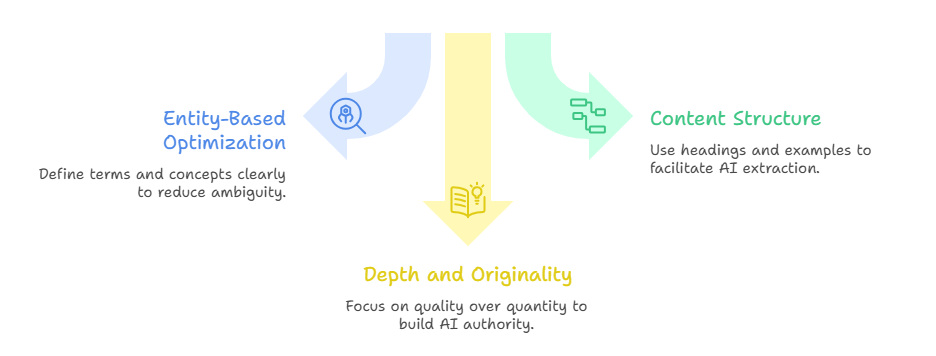
The content that performs well in traditional SEO often fails in generative AI environments. Keyword-stuffed blog posts, thin service pages, and generic “10 tips” articles don’t provide the depth or structure AI engines need. To rank on ChatGPT, Perplexity, and Google AI Overviews, your content needs to follow new rules.
First, entity-based optimization matters more than keywords. Define every term, concept, and service explicitly. Don’t assume the reader or the AI knows what you mean by “conversion optimization” or “short-form video strategy.” Explain it clearly, connect it to related concepts, and structure your definitions so they can stand alone as citeable facts. AI engines prioritize content that reduces ambiguity.
Second, your content structure must facilitate extraction. Use clear H2 and H3 headings that ask and answer specific questions. Break complex ideas into digestible sections. Include comparison tables, step-by-step processes, and concrete examples with real numbers. The easier you make it for an AI to extract a clean, accurate summary from your page, the more likely it is to use and cite your content.
Third, depth and originality beat volume. Publishing twenty mediocre articles won’t build AI authority the way two exceptionally researched, insight-rich pieces will. AI engines evaluate expertise by analyzing the uniqueness and thoroughness of your perspective. If your content repeats what everyone else says, it blends into the background. If it offers frameworks, case studies, or strategic approaches competitors miss, it becomes citeable authority.
For service businesses, this means rethinking your entire content library. Your “About Us” page should clearly define your services using industry-standard terminology. Your blog posts should answer real customer questions with specificity, not vague generalities. Your case studies should include measurable outcomes, not just feel-good testimonials. If you’re wondering what is generative engine optimization and how does it work, the answer lies in producing content that treats AI engines as your primary audience, with human readers as the secondary beneficiary.
How do UAE businesses optimize for both SEO and GEO simultaneously?
The good news is that GEO vs SEO which strategy gives better results in 2026 isn’t an either-or question. The strategies overlap significantly. Strong SEO foundations, high-quality backlinks, fast page speed, and mobile optimization all contribute to GEO performance. But GEO requires additional layers that traditional SEO doesn’t emphasize.
Start with technical infrastructure. Schema markup, which has been optional for most SEO strategies, becomes essential for GEO. Structured data tells AI engines exactly what your content represents: Is this a service page? A how-to guide? A comparison article? Without schema, AI tools must guess at your content’s purpose and structure, reducing your chances of being cited accurately.
Next, focus on topical clustering. Instead of scattered blog posts on random topics, organize your content into tight, interconnected clusters around core service areas. If your agency offers web development services, create a comprehensive cluster covering technology stacks, cost considerations, design principles, conversion optimization, and maintenance strategies. Link these articles strategically so AI engines recognize your concentrated authority on the subject.
Third, prioritize answer density over keyword density. Traditional SEO often encouraged longer content for the sake of word count. GEO rewards content that delivers maximum insight in minimum space. A 1,200-word article that directly answers eight specific questions will outperform a 3,000-word piece that meanders through generic advice. Be concise, be specific, and make every paragraph count.
UAE businesses have a distinct advantage here. Local market dynamics, regulatory considerations, and cultural nuances create opportunities for hyper-relevant content that global competitors can’t easily replicate. When you write about how to create viral short-form videos that generate leads specifically for UAE audiences, addressing platform preferences, content regulations, and audience behaviors unique to the region, you build defensible authority that AI engines will recognize and prioritize.
What role does internal linking play in AI search visibility?
Internal linking has always mattered for SEO, but its importance in GEO is magnified. AI engines use your internal link structure to understand topical relationships and authority distribution across your site. When you link strategically from a comprehensive guide on conversion strategy to your website design company service page, you’re signaling to AI tools that your agency possesses integrated expertise across both strategy and execution.
The key is natural, intent-based anchor text. Avoid generic links like “click here” or “learn more.” Instead, use descriptive phrases that match the actual search intent of your target audience: social media agency, AI search optimization agency in Dubai, or GEO services for UAE businesses. These anchor texts help AI engines understand the relationship between pages and the specific value each page provides.
Strategic internal linking also extends your authority across multiple queries. A detailed article about video marketing strategy might naturally link to both your viral content page and a related article on which platform is best for business viral content in Dubai. These connections tell AI engines that your expertise isn’t siloed in one narrow topic but spans the entire landscape of modern content marketing.
For businesses implementing this strategy, the challenge is maintaining natural language while maximizing topical relevance. The best internal links feel editorially necessary, not artificially inserted for SEO benefit. They enhance reader understanding while simultaneously strengthening your site’s semantic structure for AI interpretation.
How long does it realistically take to see GEO results?
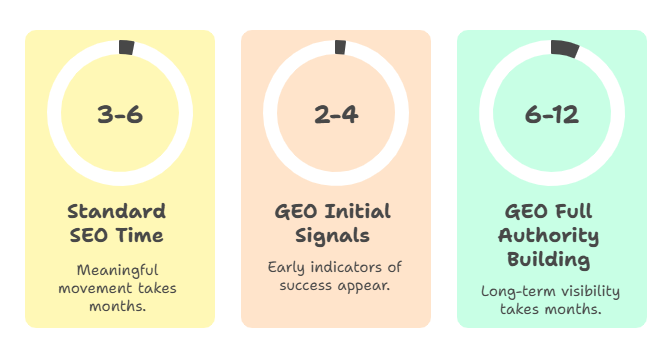
This is the question every business owner asks, and the honest answer is: longer than most digital marketing channels, but with far more durable results. Traditional paid advertising delivers immediate traffic but stops the moment you pause spending. Standard SEO takes three to six months to show meaningful movement. GEO sits somewhere in between, with initial signals appearing in two to four months but full authority building over six to twelve months.
The timeline varies based on several factors. Established domains with existing authority accelerate faster than brand-new websites. Businesses in less competitive niches see results sooner than those in saturated markets. Companies that restructure their entire content library see faster gains than those publishing incrementally while leaving old content untouched.
For UAE businesses specifically, the competitive landscape works in your favor. Global GEO strategies are still emerging, and local competitors are moving slowly. A digital marketing agency in UAE that commits to comprehensive GEO implementation now can establish category dominance before the market matures. The businesses that wait another year will find themselves fighting for visibility in a much more crowded field.
Early indicators of GEO success include mentions in AI-generated summaries, even without direct traffic. If ChatGPT or Perplexity starts citing your content when users ask industry-specific questions, you’re building the foundation for long-term visibility. Monitor these citations carefully. They’re the leading indicator of authority that will eventually translate into direct recommendations and branded searches.
What metrics should UAE businesses track for AI search performance?
Traditional analytics won’t capture the full picture of GEO performance. Google Analytics shows you traffic from identifiable sources, but AI-driven searches often don’t leave clear referral paths. You need new measurement frameworks.
Start by tracking branded search volume. As your GEO authority grows, more people will hear about your business through AI-generated recommendations and then search for you by name. An uptick in branded searches, particularly specific combinations like “BRB digital marketing Dubai” or variations including your service offerings, indicates growing AI-driven awareness.
Second, monitor your appearance in AI responses directly. Regularly query ChatGPT, Perplexity, and Google AI Overviews with the questions your target customers ask. Track which queries return your content, how you’re cited, and what competitors appear alongside you. This qualitative data reveals your relative authority in the eyes of AI engines.
Third, track engagement quality from the traffic you do receive. Users arriving through AI recommendations typically demonstrate higher intent than random organic traffic. They’ve already received preliminary information from the AI and are visiting your site for deeper engagement or direct contact. These visitors should convert at higher rates, stay longer, and engage with more pages per session.
For businesses implementing comprehensive strategies that combine what makes business content go viral on social media in 2026 principles with technical GEO optimization, the metrics often tell a story of shifting traffic sources but improved lead quality. You might see fewer total visitors but more qualified inquiries, shorter sales cycles, and higher customer lifetime value.
How do you make AI engines recommend your business specifically?
This is the ultimate goal: not just being cited as a source, but being recommended as the solution. When someone asks an AI tool “who should I hire for web development in Dubai,” you want your agency named explicitly in the response.
Achieving this requires concentrated brand authority combined with exceptional content depth. AI engines recommend specific businesses when they’ve established clear category leadership through comprehensive, authoritative content that consistently outperforms competitors in clarity, depth, and originality.
Start by claiming and optimizing every platform where AI tools gather data. Your Google Business Profile, LinkedIn company page, industry directories, and review platforms all feed into the knowledge base AI engines use. Ensure your business information is consistent, comprehensive, and regularly updated. Include detailed service descriptions, location information, and credibility signals like certifications, partnerships, and client testimonials.
Next, create content so definitively authoritative on your core topics that AI engines have no choice but to prioritize it. If you specialize in how to optimize website content for AI-powered search, publish the most thorough, technically accurate, strategically insightful guide on that topic available anywhere online. Support it with case studies, data, and unique frameworks competitors can’t easily replicate.
Finally, build external validation through earned media, guest contributions, and strategic partnerships. AI engines don’t just evaluate your owned content. They assess what others say about you, where you’re cited, and whether industry authorities reference your work. A strategic PR and content distribution plan accelerates AI recognition significantly.
Should Dubai businesses abandon traditional SEO for GEO?
Absolutely not. This isn’t a replacement scenario. It’s an expansion of strategy. Traditional SEO still drives significant traffic, particularly for navigational and transactional queries. Local search still matters enormously for service businesses. What’s changing is that SEO alone is no longer sufficient.
The most effective approach treats SEO as the foundation and GEO as the next layer. You still need fast page speed, mobile optimization, clean technical structure, and quality backlinks. But you add entity optimization, answer-focused content, AI-friendly structure, and strategic authority building on top.
Think of it as future-proofing your digital presence. The businesses investing in both strategies now won’t face a crisis when AI search fully matures. They’ll already be established as trusted sources, capturing visibility across both traditional and AI-powered search environments.
For UAE companies, particularly those in competitive service industries, this integrated approach creates sustainable competitive advantage. While competitors debate whether to focus on SEO or GEO, you’re capturing both, building authority that serves multiple channels simultaneously. If you’re exploring this integration further, we’ve covered this in detail here: why successful Dubai companies are shifting from SEO to GEO.
What are the biggest GEO mistakes UAE businesses should avoid?
The first major mistake is treating GEO as a checkbox exercise. Businesses read that schema markup matters, add some basic structured data, and assume they’re done. Effective GEO requires comprehensive content restructuring, ongoing optimization, and strategic planning across your entire digital ecosystem.
The second mistake is neglecting human readability in favor of AI optimization. Content written exclusively for AI extraction becomes robotic, awkward, and ultimately counterproductive. The best GEO content serves both audiences simultaneously: clear and structured enough for AI parsing while remaining engaging and persuasive for human readers.
Third, businesses underestimate the importance of original research and unique perspectives. Republishing competitor insights or rehashing common industry knowledge won’t build AI authority. You need proprietary frameworks, original data, specific case studies, and perspectives that only your business can provide.
Fourth, many companies spread their efforts too thin, publishing shallow content across too many topics rather than building deep authority in core service areas. A digital marketing agency strategy that covers twenty different services superficially will always lose to focused expertise in three services with exceptional depth.
Finally, businesses fail to connect their GEO efforts with the rest of their marketing ecosystem. Your GEO content should support your social strategy, inform your advertising messaging, and align with your sales conversations. When these elements work together, they compound each other’s effectiveness.
How does GEO change content planning for service businesses?
Traditional content planning focused on keyword research: find high-volume, low-competition keywords, then create content targeting those phrases. GEO requires planning around entities, concepts, and question clusters instead.
Start by mapping the complete customer journey for each service you offer. What questions do prospects ask at awareness stage? At consideration stage? At decision stage? For a business offering how to create a website that generates leads automatically services, the question clusters might include technical requirements, cost considerations, design principles, conversion strategies, and ongoing optimization.
Next, identify the conceptual relationships between these questions. Which questions naturally lead to others? Which topics require foundational understanding before advanced concepts make sense? Structure your content to reflect these relationships, using internal links to guide both human readers and AI engines through the logical progression of information.
Third, prioritize depth over breadth. Instead of twenty 800-word articles touching briefly on various topics, create five 2,000-word comprehensive guides that definitively answer every related question within their domain. Support these pillar pieces with shorter, focused articles addressing specific sub-questions, all linked back to the comprehensive guide.
For UAE businesses, this approach has a practical advantage: it’s easier to maintain. Rather than churning out constant content to feed an SEO strategy, you build a smaller library of exceptional resources that establish lasting authority. You can focus on quality, accuracy, and strategic value rather than hitting arbitrary publishing quotas.
What’s the future of search visibility for UAE businesses?
The trajectory is clear: AI-mediated search will continue growing, traditional organic traffic will continue declining for informational queries, and businesses that adapt will capture disproportionate market share. The question isn’t whether to adapt, but how quickly.
Within the next two years, we’ll likely see AI search become the default for most informational queries. People will still use traditional search for navigational needs, they’ll visit your site directly when they know what they want, but the research and discovery phase will increasingly happen through conversational AI tools that provide synthesized answers rather than link lists.
For service businesses in Dubai, Abu Dhabi, and across the UAE, this creates an unusual opportunity. The local market is sophisticated enough to adopt AI tools quickly but not yet saturated with competitors who’ve mastered GEO strategies. Businesses that move decisively now can establish authority that becomes increasingly difficult for later entrants to disrupt.
The winners in this transition will be companies that treat GEO as a strategic priority rather than a tactical add-on. They’ll restructure their content completely, optimize their technical infrastructure comprehensively, and build authority systematically across every service area. They’ll connect their GEO efforts with their broader marketing strategy, ensuring that AI visibility translates into actual business growth.
If you’re ready to explore what this transition looks like for your specific business, understanding complete digital marketing strategy for service businesses in 2026 principles provides the foundation for integrating GEO effectively into your overall growth plan.
Frequently Asked Questions
What’s the difference between SEO and GEO for UAE businesses?
SEO optimizes your content to rank on traditional search engine results pages, focusing on keywords, backlinks, and technical factors. GEO optimizes your content to be understood, extracted, and cited by AI engines like ChatGPT and Google AI Overviews. While SEO aims for click-through traffic, GEO builds authority that makes AI tools recommend your business directly. Both strategies share common foundations like quality content and technical excellence, but GEO requires additional emphasis on entity optimization, answer density, and structured data that AI can easily parse.
How much does GEO implementation cost for a small business in Dubai?
The investment varies based on your current digital presence and goals. Basic GEO optimization, including schema implementation and content restructuring for existing pages, might cost AED 15,000 to 30,000 for a small business with a modest website. Comprehensive strategies involving new content creation, technical audits, and ongoing optimization typically range from AED 5,000 to 15,000 monthly. However, GEO delivers compounding returns over time. Unlike paid advertising that stops working when you stop spending, GEO authority builds cumulatively, making the cost-per-acquisition decrease significantly after the initial six to twelve month investment period.
Can a new business with no website history compete in AI search?
Yes, but the strategy differs from established businesses. New companies can’t rely on domain authority or existing backlink profiles, so they must compensate with exceptional content quality and strategic focus. Choose one or two specific service niches rather than trying to compete broadly. Create the most comprehensive, authoritative content available on those specific topics. Use schema markup from day one to help AI engines understand your content immediately. Build external credibility through strategic partnerships, guest contributions, and targeted PR. New businesses that execute this focused approach can achieve AI visibility within four to six months, sometimes faster if the niche is underserved.
How do I know if my content is actually being cited by AI engines?
Direct monitoring is the most reliable method. Regularly query ChatGPT, Perplexity, Google’s AI Overviews, and other tools with the exact questions your target customers ask. Note when your content appears in responses and how it’s positioned relative to competitors. Track branded search volume in Google Analytics and Search Console as a secondary indicator, since AI citations often drive awareness that leads to branded searches. Some specialized tools are emerging to track AI citations automatically, though the field is still developing. Manual testing remains the gold standard for understanding your actual AI presence.
What happens to my business if I ignore GEO and focus only on traditional marketing?
You’ll likely see gradual but accelerating decline in organic visibility for informational queries, even if your traditional SEO rankings hold steady. Prospects researching solutions will receive answers from AI tools that don’t mention your business, leading them toward competitors who’ve optimized for AI visibility. Your paid advertising costs will increase as you compete for the same traffic pool with everyone else who’s lost organic reach. Over time, you’ll need to spend more to achieve the same results while competitors with strong GEO presence capture market share with lower acquisition costs. The decline won’t be immediate, but within two to three years, the competitive gap between GEO-optimized businesses and those relying solely on traditional channels will become substantial.
Do I need different content for GEO versus SEO?
Not entirely different, but structured and optimized differently. The foundational information remains the same, but GEO content requires clearer definitions, more explicit entity relationships, better structural organization, and deeper answer density. A service page that works for traditional SEO might list your offerings with brief descriptions. The same page optimized for GEO would clearly define each service, explain its value proposition, outline the process, address common questions, and include structured data that helps AI engines understand exactly what you offer and to whom. Think of GEO as requiring higher content quality standards rather than completely different content types.
Moving Forward in the AI Search Era
The shift from traditional search to AI-mediated discovery represents the most significant change in digital visibility since Google became dominant two decades ago. For UAE businesses, particularly service companies competing in markets like Dubai, Abu Dhabi, and Sharjah, this transition creates both urgent challenges and exceptional opportunities.
The businesses that will thrive aren’t necessarily the largest or most established. They’re the ones that recognize how fundamentally search behavior is changing and adapt their strategies accordingly. They’re building authority that works across both traditional search engines and AI tools. They’re creating content that serves human readers while meeting the structural requirements AI engines need for accurate extraction and citation.
This isn’t about abandoning everything you’ve built with traditional digital marketing. Your SEO foundation, your paid advertising, your social presence all remain valuable. But layering GEO optimization on top of these efforts ensures you’re capturing visibility across every channel where your potential customers are searching, researching, and making decisions.
The window for easy competitive advantage is open now but won’t stay open indefinitely. As more businesses recognize the importance of AI search optimization, the effort required to achieve prominence increases. The companies establishing authority today will have significant head starts over those who wait.
If you’re ready to protect and grow your digital visibility in this changing landscape, the next step is understanding how Genarative Engine Opmization services for UAE businesses integrate with your existing marketing strategy. The transition requires strategic planning, systematic execution, and ongoing optimization, but the businesses that commit to this evolution position themselves for sustained growth while competitors struggle with declining organic reach and rising acquisition costs.
The future of search visibility is here. The question is whether you’ll lead the transition or be forced to follow.