
Your competitor just posted a video that got 2 million views in three days. Meanwhile, your carefully crafted post from last week got 47 likes, mostly from employees and family members. The gap between businesses winning attention online and those struggling to be seen keeps getting wider, and video content is the primary reason why.
Here’s what most small business owners don’t realize: going viral isn’t about luck or huge budgets. It’s about understanding platform algorithms, human psychology, and the specific formats that drive engagement. The small café in Jumeirah that suddenly has lines out the door didn’t get there by accident. The local fitness trainer who’s now booked months in advance didn’t stumble into visibility. They understood viral video mechanics and used them strategically.
For small and medium businesses in the UAE, viral video marketing has become one of the most cost-effective ways to compete with larger competitors. While big brands spend millions on traditional advertising, smart SMBs are capturing massive attention with videos that cost a fraction of that amount. The question isn’t whether your business should be creating viral video content. It’s whether you can afford not to.
What makes a video actually go viral instead of just getting a few views?
The term “viral” gets thrown around loosely, but there’s actual science behind why some videos explode and others disappear. Understanding these mechanics is the difference between wasting money on video content and strategically building attention for your business.
First, viral videos trigger strong emotional responses quickly. The first three seconds determine everything. If viewers don’t feel something immediately, curiosity, surprise, humor, inspiration, or even mild outrage, they scroll. Platform algorithms track this ruthlessly. Videos that retain viewers in those critical first moments get pushed to more people. Videos that don’t get buried.
Second, viral content follows platform-specific formats. A video that performs well on TikTok often fails on LinkedIn, and vice versa. Each platform has different audience expectations, algorithm priorities, and content formats that work. Instagram Reels favor quick cuts and trending audio. YouTube Shorts reward slightly longer storytelling. LinkedIn videos need professional hooks and business value. Trying to use the same video across all platforms without adaptation rarely works.
Third, viral videos tap into existing conversations or trends. This doesn’t mean jumping on every trending sound or challenge. It means understanding what your target audience is already interested in and creating content that joins that conversation in an authentic way. A Dubai restaurant that creates content about “hidden gems in JBR” is tapping into an existing interest. A fitness trainer addressing “how to work out during Ramadan” is joining a relevant conversation.
Fourth, successful viral content is shareable. People share videos that make them look good, help them connect with others, or express something they feel but couldn’t articulate. Business videos go viral when they’re useful enough or entertaining enough that sharing them adds value to the sharer’s social presence.
The algorithm factor matters enormously. Social platforms want to keep users engaged as long as possible. They promote content that achieves this. Videos with high completion rates, strong early engagement, and shares get exponentially more distribution. The first hour after posting is critical. If your video gets strong engagement immediately from your initial audience, the algorithm tests it with a wider group. If that group also engages, it expands further. This snowball effect is how videos go from 1,000 views to 1 million views.
For small businesses specifically, viral success often comes from specificity rather than broad appeal. A video trying to appeal to everyone usually appeals to no one strongly enough to share. A video that speaks directly to a specific audience’s specific problem or interest gets shared within that community, and that’s often enough to drive meaningful business results.
How much should small businesses actually budget for viral video marketing?
The pricing landscape for video marketing services confuses many small business owners because costs vary dramatically based on what’s included and the expertise level of the provider.
At the entry level, you’ll find freelancers and basic agencies offering video packages starting around 1,500 to 3,000 AED per video. This typically includes basic filming with standard equipment, simple editing, and delivery of the final product. This works for businesses that need occasional video content and have someone internally who understands strategy, but it rarely drives viral results because strategic planning and platform optimization are minimal or absent.
Mid-range services, where most growing SMBs should focus, typically run 5,000 to 12,000 AED per month for ongoing video marketing. This level includes strategic content planning based on platform algorithms and trends, professional filming with proper equipment and lighting, advanced editing optimized for each platform, regular posting schedules (usually 8-12 pieces per month across platforms), performance tracking and optimization, and crucially, strategy adjustments based on what’s working. This range delivers consistent results for businesses serious about video marketing.
Premium viral video services start around 15,000 AED monthly and can reach 30,000 AED or more for comprehensive campaigns. These include everything in mid-range services plus dedicated strategist attention, more frequent content production, multi-platform optimization with custom edits for each, advanced analytics and competitor analysis, and often, influencer coordination or paid amplification strategies.
For UAE businesses specifically, pricing reflects several local factors. Dubai’s competitive market means quality creators charge premium rates. The need for cultural awareness and potential multilingual content (Arabic and English) adds complexity. The city’s high production costs, from locations to talent, influence pricing.
One important consideration many businesses miss is the difference between project-based and retainer pricing. A single viral video campaign might cost 8,000 to 15,000 AED, but viral marketing works best as an ongoing strategy, not a one-time project. Consistent content creation, testing, and optimization deliver better ROI than sporadic campaigns. Monthly retainers typically offer better value and results than project-based work.
Hidden costs to watch for include usage rights (who owns the content), revision limits (unlimited revisions sound good but rarely are necessary with good initial strategy), and amplification budgets (organic reach is valuable, but paid promotion often accelerates results). Clarify these upfront.
Budget-conscious advice for small businesses: start with a three-month commitment at the mid-range level. This provides enough time to test different content types, identify what resonates with your audience, and see measurable results. Many businesses see their first viral moment within the first 60 days, but consistent success usually takes three to six months of strategic effort.
The ROI question matters more than absolute cost. Spending 8,000 AED monthly on viral video marketing that brings in 40,000 AED in new revenue is excellent ROI. Spending 3,000 AED on cheap videos that generate no results is waste. Focus on expected returns, not just costs.
Why do most business videos fail to get any meaningful engagement?
Understanding failure modes helps avoid them. Most business videos fail for predictable, preventable reasons.
The most common mistake is creating content that’s really just advertising. Your audience doesn’t scroll social media hoping to see ads. They’re there for entertainment, education, or inspiration. A video that’s just “look at our products, we’re great, buy from us” gets scrolled past immediately. Viral videos from businesses succeed because they provide value first and promote subtly or secondarily.
Second, businesses ignore the platform-specific requirements. They create a beautiful two-minute brand video, then wonder why it fails on TikTok where the algorithm heavily favors videos under 30 seconds. They post vertical video to YouTube where horizontal format performs better. They use trending audio on LinkedIn where professional, original audio often works better. Platform mechanics matter enormously.
Third, the hook is weak or missing. The first three seconds should make viewers stop scrolling. Many business videos start with logos, generic introductions, or slow build-ups. By the time they get interesting, viewers are gone. Strong videos hook immediately with a surprising statement, visual intrigue, or relevant problem identification.
Fourth, production quality is wrong for the platform. This cuts both ways. Over-polished, corporate-style videos often fail on platforms like TikTok where authentic, less-produced content performs better. Conversely, poorly lit, badly framed videos fail everywhere because they signal low quality regardless of content value.
Fifth, businesses post inconsistently. They create five videos, post them, see modest results, and give up. Viral success requires consistent effort. The algorithm rewards accounts that post regularly with higher initial distribution. Audience building requires ongoing content that keeps you top of mind. Sporadic posting means constantly starting from zero.
Sixth, there’s no clear call to action or next step. A video gets views but generates no business results because viewers don’t know what to do next. Effective business videos guide viewers toward a specific action, whether that’s visiting a website, following the account, or contacting the business.
Seventh, businesses don’t test or optimize. They decide on a content approach, execute it, and stick with it regardless of results. Successful viral marketing requires constant testing. Try different hooks, different formats, different topics. Track what works and do more of that. Adapt based on performance data, not assumptions.
For UAE businesses specifically, an additional failure point is cultural misalignment. Content that works in Western markets sometimes misses the mark in Dubai’s diverse, multicultural environment. Understanding local sensibilities, appropriate humor, and cultural references makes a significant difference in how content performs.
What types of video content work best for different industries in the UAE?
Video strategy should align with your specific industry and target audience. What works for a restaurant won’t work for a B2B consulting firm, and generic advice often wastes resources.
For restaurants and cafés in Dubai, behind-the-scenes content consistently performs well. Show the preparation of signature dishes, introduce kitchen staff, or showcase ingredient sourcing. Food styling videos where dishes are plated beautifully drive engagement. User-generated content, customers enjoying meals, builds social proof. Quick tips like “best items for first-time visitors” or “how to order like a local” provide value while promoting your business. Location-specific content works excellently in Dubai, “hidden spots in Business Bay” or “best breakfast view in Marina” taps into local interest.
Retail businesses benefit from product demonstration videos, styling tips, comparison content, customer testimonials captured on video, and unboxing or reveal videos. For fashion retail specifically, outfit transition videos (where clothes change quickly) perform exceptionally well on Instagram Reels and TikTok. For electronics or tech retail, quick tips and tricks, lesser-known features, or problem-solving content drives engagement.
Service-based businesses like salons, spas, or fitness studios should focus on transformation content showing before and after results, educational content teaching viewers something valuable even if they don’t book immediately, day-in-the-life videos that build connection with staff, and client testimonial stories. For fitness specifically, quick workout tips, form corrections, and myth-busting content consistently gain traction.
B2B companies and professional services face unique challenges because their content needs to work on platforms like LinkedIn rather than TikTok. Successful formats include expert insights addressing specific industry challenges, quick tips that demonstrate expertise, thought leadership content on industry trends, case study stories presented engagingly, and explainer videos that simplify complex topics. The key difference is maintaining professionalism while still creating content engaging enough to stop the scroll.
Real estate agents and property companies in Dubai should leverage property tour videos shot engagingly (not just slow pans), neighborhood guides, market insight videos addressing common buyer questions, investment tip content, and comparison videos helping buyers make decisions. Dubai’s visual appeal makes real estate particularly suited to video content if executed well.
Healthcare and wellness businesses must balance engagement with professionalism and regulations. Educational content answering common health questions, myth-busting videos, wellness tips, and patient success stories (with proper permissions) all work well. Avoid anything that could be interpreted as medical advice without proper disclaimers.
For automotive businesses, whether dealerships or services, customer testimonials, feature highlights, comparison content, maintenance tips, and behind-the-scenes looks at service processes build trust and engagement.
The common thread across all industries is providing genuine value. Videos should educate, entertain, or inspire before they promote. The businesses seeing viral success aren’t those with the best products. They’re the ones creating content their audience actually wants to watch.
How long does it take to see actual business results from viral video marketing?
Setting realistic expectations prevents disappointment and premature abandonment of effective strategies.
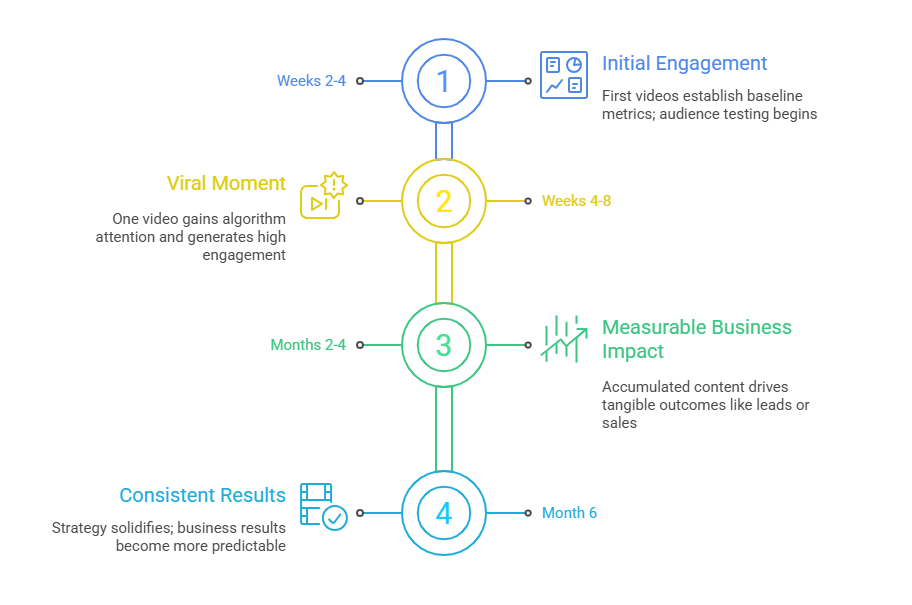
Initial engagement metrics typically appear within the first two to four weeks. Your first videos establish baseline performance. You’ll see views, likes, and comments, though likely not viral numbers yet. This phase is about testing, learning what your audience responds to, and refining approach. Most businesses see gradual growth in followers and engagement during this period.
The first viral moment often happens between weeks four and eight, assuming consistent, strategic posting. One video catches the algorithm’s attention, gets pushed to a broader audience, and generates significantly higher engagement than previous content. This doesn’t always translate to immediate business results, but it validates that your content strategy can generate attention.
Measurable business impact usually appears between months two and four. This is when accumulated video content, growing follower base, and increased brand awareness start driving tangible outcomes. For service businesses, this means consultation requests or bookings. For retail, it means website traffic and sales. For B2B companies, it means inbound leads.
Consistent results typically solidify around month six. By this point, you’ve identified what content resonates, built an engaged audience, and established regular posting rhythms. Business results become more predictable. You understand roughly how many views translate to inquiries and how many inquiries convert to customers.
Several factors influence these timelines. Content quality and strategic alignment matter most. Well-planned, professionally executed videos gain traction faster than poorly made content regardless of quantity. Posting consistency affects results significantly. Businesses posting 3-4 times weekly see faster growth than those posting sporadically. Starting audience size plays a role. Businesses with existing social followings see faster results than those starting from zero, though viral content can overcome initial small audiences quickly.
Industry and product complexity influence speed too. Restaurants and retail businesses often see faster results because the path from video to purchase is short. B2B services with longer sales cycles see engagement quickly but closed deals take longer.
For Dubai businesses specifically, the market’s competitive nature means standing out takes strategic effort, but the city’s high social media usage rates mean engaged audiences are accessible. Dubai residents and visitors actively seek recommendations on social platforms, creating opportunities for businesses with strong video content.
Red flags in timeline expectations include anyone promising specific viral results by specific dates (viral success can’t be guaranteed on a timeline) or suggesting immediate sales from video content with no audience building period. Legitimate agencies explain realistic timelines and focus on sustainable growth rather than overnight success.
Measuring progress correctly matters. Early on, track engagement rate (likes, comments, shares relative to views), follower growth rate, and content completion rates. As campaigns mature, shift focus to website traffic from social channels, inquiry volume from video content, and ultimately, revenue attributed to video marketing efforts.
The compounding effect is real. Month six results should exceed month three results, which should exceed month one results. This is because each video contributes to accumulated brand awareness, growing audiences mean each new video starts with more initial viewers, and proven content strategies can be repeated and refined.
What should small businesses look for when choosing a viral video marketing agency?
Selecting the right partner requires looking beyond portfolios and promises to evaluate actual capabilities and alignment with your business needs.
First, examine their understanding of platform algorithms and trends. A legitimate viral video agency in Dubai should clearly explain how different social platform algorithms work, what content formats are currently performing well on each platform, and how they stay updated as algorithms and trends change. Generic answers about “creating engaging content” aren’t enough. You want specific, detailed understanding.
Second, evaluate their strategic approach. Ask how they would develop a content strategy for your specific business. Strong agencies start with questions about your target audience, business goals, and competitive landscape before suggesting content ideas. Weak agencies offer generic packages without considering your unique situation. The strategy should connect video content to actual business outcomes, not just views and likes.
Third, look at production quality appropriate to your needs and platforms. This doesn’t always mean the highest-end production. For TikTok-focused strategies, overly polished videos often underperform. For LinkedIn B2B content, production quality signals professionalism. The agency should understand what level of production suits your industry and target platforms.
Fourth, assess their content ideation process. How do they come up with video ideas? Do they analyze your competitors? Do they research trending topics in your industry? Do they involve you in the creative process? Strong agencies have systematic approaches to content development, not just random brainstorming.
Fifth, examine their performance tracking and reporting. What metrics do they track? How do they report results? Can they connect video performance to business outcomes? Agencies focused only on vanity metrics (views and likes) without tracking conversions or business impact won’t deliver ROI.
Sixth, evaluate their understanding of the UAE market. Dubai’s multicultural environment, cultural sensibilities, and local trends require specific knowledge. An agency that treats Dubai like any other market will miss opportunities and potentially create cultural missteps. Ask about their experience with UAE businesses and their understanding of local audience preferences.
Seventh, consider their revision and optimization process. Viral video marketing requires constant testing and adjustment. How does the agency handle content that underperforms? Do they analyze why and adjust strategy? Or do they just keep producing similar content? Continuous optimization separates effective agencies from those just churning out videos.
Warning signs include agencies guaranteeing viral results (viral success can’t be guaranteed, only optimized for), those unable to explain their strategic process clearly, agencies showing only their best work without discussing failures and lessons learned (every agency has videos that don’t perform; what matters is learning from them), and those proposing identical strategies for different business types (effective video marketing is customized, not one-size-fits-all).
Questions to ask potential agencies include: How do you stay current with platform algorithm changes? Can you show examples of business results, not just viral videos, you’ve driven for clients? What’s your process when a content strategy isn’t performing? How do you ensure content aligns with our brand while still being engaging? What metrics do you prioritize and why?
For small businesses specifically, also evaluate the agency’s communication style and accessibility. You want a partner who explains things clearly, responds promptly, and makes you feel involved in the process, not a vendor who takes your money and disappears until delivering videos.
How does BRB create viral video content that actually drives business results?
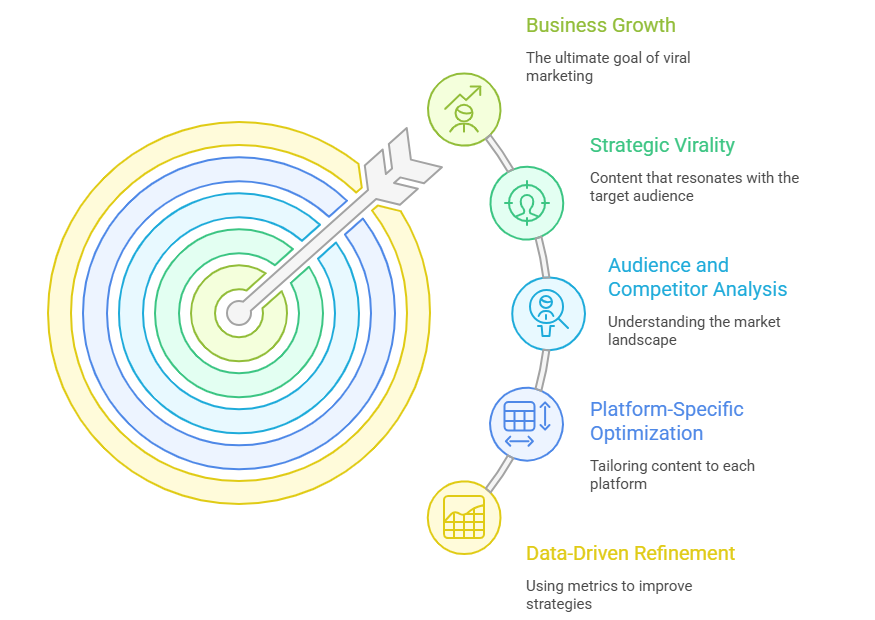
Our approach to viral video marketing differs from typical agencies because we understand that viral views mean nothing if they don’t translate to business growth. We focus on strategic virality, content that spreads widely within your target audience and moves them toward becoming customers.
We start every engagement with audience and competitor analysis. Before creating a single video, we research your specific target audience on each relevant platform, analyze competitors’ successful content, identify content gaps and opportunities, and map potential content themes to business objectives. This foundation ensures every video serves a strategic purpose beyond just getting views.
Our content creation process prioritizes platform-specific optimization. We don’t create one video and post it everywhere. We develop concepts that can be adapted across platforms while respecting each platform’s unique algorithm priorities and audience expectations. A concept might become a 15-second TikTok video, a 45-second Instagram Reel with different editing, and a 90-second YouTube Short with expanded storytelling. This maximizes return on creative investment.
We focus heavily on the first three seconds. Every video we create is engineered to stop the scroll immediately. This might be a surprising visual, a provocative statement, a relatable problem identification, or pattern interruption through unexpected editing. Whatever the approach, the hook is deliberate and tested.
Our team combines creative storytelling with data analysis. We track performance metrics obsessively, identifying patterns in what works. Which video formats drive highest completion rates? What topics generate most shares? What calls to action convert best? We use this data to continuously refine strategy, not just produce more content.
For UAE businesses specifically, we leverage our understanding of Dubai’s diverse market. We know what resonates with local audiences versus international residents. We understand cultural considerations that affect content reception. We tap into Dubai-specific trends and conversations that larger international agencies miss.
We also integrate video marketing with broader digital strategy. Viral videos drive attention, but that attention needs somewhere to go. We ensure your website can handle traffic spikes, landing pages are optimized for conversions, and follow-up mechanisms capture interest before it fades. Viral moments are opportunities, but only if you’re prepared to capitalize on them.
Our production approach balances quality with platform authenticity. We use professional equipment and experienced creators, but we avoid the overly polished corporate feel that kills engagement on platforms like TikTok. The goal is content that looks professional enough to build credibility but authentic enough to feel relatable.
We maintain consistent posting schedules because we know algorithm rewards consistency. Rather than sporadic campaigns, we establish sustainable content rhythms that keep your business visible and give the algorithm multiple opportunities to promote your content to wider audiences.
Finally, we measure what matters. Views and likes are tracked, but we focus on metrics tied to business outcomes: website traffic from social channels, inquiry volume, customer acquisition attributed to video content, and ultimately, ROI. Every campaign includes transparent reporting showing not just engagement metrics but business impact.
Conclusion
Viral video marketing isn’t a luxury for small businesses anymore. It’s one of the most cost-effective ways to compete with larger competitors who dominate traditional advertising channels. The small business that masters viral video content can capture as much attention as corporations spending millions on ads.
Success requires understanding platform algorithms, creating genuinely engaging content, maintaining consistency, and connecting viral moments to business outcomes. It’s not about getting lucky with one video. It’s about strategic, ongoing content creation that steadily builds attention and converts that attention into customers.
Choosing the right agency partner means finding professionals who understand both the creative and strategic sides, who know the UAE market specifically, and who measure success by business results, not just views. The gap between businesses thriving with video marketing and those struggling to be seen online will only widen. The question is which side of that gap your business will be on.
If your current marketing efforts aren’t generating the attention and results you need, viral video marketing might be the most impactful investment you can make. The businesses dominating your industry’s social presence didn’t get there by accident. They recognized the opportunity and executed strategically. That same opportunity exists for your business right now.
Frequently Asked Questions
How many videos do I need to post per week to have a chance at going viral?
Consistency matters more than specific frequency, but successful viral strategies typically involve 3-5 posts weekly across platforms. This gives the algorithm multiple opportunities to test your content with wider audiences. However, quality beats quantity. Three strategically planned, well-executed videos per week outperform seven hastily made ones. The key is maintaining regular posting while ensuring each video has strong hooks, clear value, and platform optimization. Dubai businesses should focus on sustainable schedules they can maintain long-term rather than unsustainable bursts of activity.
Can viral video marketing work for boring or traditional industries?
Absolutely. Every industry has interesting angles if you look creatively. Accounting firms have created viral content about tax tips and financial mistakes. Law firms have succeeded with legal myth-busting videos. Manufacturing companies have gained massive followings showing production processes. The key is finding what’s interesting about your business from your audience’s perspective, not yours. Behind-the-scenes content, expert insights, common misconceptions, or problem-solving tips work across virtually any industry. Traditional industries often have advantages because there’s less competition for attention in their content niches.
What happens if a video goes viral but attracts the wrong audience?
This is why strategic virality matters more than random viral success. Videos designed to go viral within your target audience include hooks, topics, and calls to action relevant to potential customers. If you’re a Dubai-based luxury real estate agent and your video goes viral, but it’s with teenagers in another country, that’s vanity metrics without business value. Good viral video marketing targets “qualified virality” where the people seeing and sharing your content are actually potential customers. Strategic content planning and platform selection prevent most wrong-audience viral scenarios.
Do I need to show my face in videos or can my business go viral without that?
Face-to-camera content often builds stronger connection and performs well, but it’s not mandatory. Many businesses succeed with product-focused videos, text-on-screen content, voiceover narration over B-roll, animation or motion graphics, or team-based content featuring different staff members. The format should match your comfort level and brand style. That said, personal connection drives engagement, so businesses willing to show faces and personalities often see faster audience growth. For UAE businesses, consider cultural factors that might affect comfort with on-camera presence and adapt accordingly.
How do I measure ROI from viral video marketing when sales cycles are long?
Track leading indicators that connect video content to business outcomes. Monitor website traffic from social channels to see if videos drive people to learn more about your services. Track consultation requests, demo bookings, or contact form submissions and ask how people found you. Use UTM parameters on links in video descriptions to attribute traffic sources accurately. For long sales cycles, measure engagement with your content from decision-makers in target companies on platforms like LinkedIn. Even without immediate sales, track whether video content moves prospects through your funnel. Over time, patterns emerge connecting video engagement to closed deals.
Should I focus on one social platform or spread content across multiple platforms?
Start with the platform where your target audience is most active and engaged, master it, then expand. Spreading thin across five platforms with inconsistent, poorly optimized content delivers worse results than dominating one platform strategically. For most UAE SMBs, Instagram and TikTok are primary platforms for B2C businesses, while LinkedIn dominates for B2B. Once you’re seeing consistent results on your primary platform (typically after 2-3 months of strategic effort), expand to secondary platforms by adapting successful content rather than creating entirely new content for each. This approach maximizes resources while building sustainable viral marketing systems.