

Most businesses in the UAE are spending on digital marketing without knowing if it’s actually working. They post on social media, run ads, update their website occasionally, and hope for results. But hope isn’t a strategy, and guesswork costs money.
If your marketing feels like throwing darts in the dark, you’re not alone. The good news is that diagnosing what’s broken doesn’t require expensive consultants or complex tools. What you need is a structured audit framework that reveals exactly where you’re losing leads, wasting budget, and missing opportunities.
This guide walks you through a practical digital marketing audit you can run yourself. By the end, you’ll know what’s working, what’s failing, and what to fix first.
Why Most Businesses Skip Audits and Pay for It Later
Business owners rarely audit their marketing because they assume everything is fine as long as something is happening. Posts go up, ads run, the website exists. But activity doesn’t equal effectiveness.
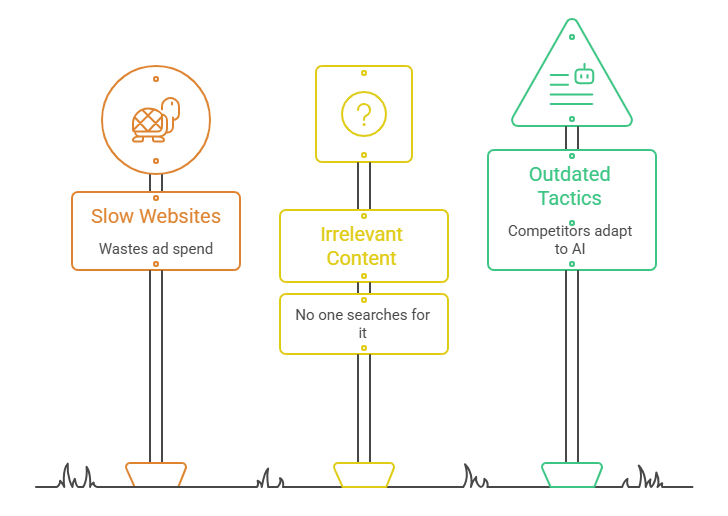
Here’s what usually goes wrong. Companies spend thousands on ads that send traffic to slow websites. They create content nobody searches for. They optimize for outdated tactics while competitors adapt to AI search engines and new platforms. The result is stagnant growth and confusion about where the real problem lies.
An audit removes the guesswork. It shows you which channels drive revenue, which burn budget, and which need to be rebuilt from scratch. For service businesses in Dubai and across the UAE, this clarity is the difference between profitable marketing and expensive noise.
The Five Areas Every Business Must Audit
A complete digital marketing audit covers five core areas. Each one impacts how customers find you, trust you, and decide to buy from you.
Traffic Sources and Acquisition Channels
Start by understanding where your visitors actually come from. Log into Google Analytics or your website dashboard and pull data for the last 90 days. Look at organic search, paid ads, social media, direct traffic, and referrals.
Most businesses discover that one or two channels drive the majority of traffic while others contribute almost nothing. If organic search is weak, your SEO needs work. If paid ads dominate but conversions are low, your landing pages or targeting might be off. If social media sends visitors who bounce immediately, your content isn’t matching audience intent.
The goal here isn’t just to count visitors. It’s to identify which channels bring qualified leads who are ready to engage or buy. Traffic without intent is just noise.
Website Performance and Conversion Paths
Your website is where marketing either converts or dies. Even if you’re driving traffic, a broken website kills results.
Run a speed test using Google PageSpeed Insights. If your site takes longer than three seconds to load, you’re losing visitors before they even see your content. Mobile performance matters even more in the UAE, where most users browse on their phones.
Next, check your conversion paths. Can visitors easily find your services, contact information, or booking system? Do forms work? Are calls to action clear? Walk through your site as if you’re a first-time visitor and note every point of friction.
If you’re unsure whether your website is built to convert or just exists as a digital brochure, companies like web development agencies in Dubai can assess structure, speed, and user experience to identify what’s costing you leads.
Content Performance and Engagement Metrics
Content is only valuable if people engage with it. Pull metrics for your blog posts, social media content, and video performance. Look at views, time on page, shares, comments, and click-through rates.
Identify your top-performing content and ask why it worked. Was it the topic? The format? The timing? Then look at your underperformers and figure out what went wrong.
Many businesses create content without checking if anyone actually searches for those topics. If your blog traffic is flat, you might be writing for yourself instead of your audience. If social posts get impressions but no engagement, your messaging isn’t resonating.
For businesses focused on short-form video, understanding what drives virality is critical. What makes business content go viral on social media in 2026? breaks down the mechanics of high-performing content so you can stop guessing and start creating strategically.
Search Visibility Across Traditional and AI Engines
SEO isn’t dead, but it’s evolving fast. A strong audit now includes both traditional Google rankings and visibility on AI-powered search engines like ChatGPT, Perplexity, and Google’s AI Overviews.
Search your primary service keywords and see where you rank on Google. If you’re not on page one, potential customers aren’t finding you. But don’t stop there. Open ChatGPT or Perplexity and ask the same questions your customers would ask. Does your business appear in the results?
Most companies have zero presence in AI search because they’ve never optimized for it. This is a massive gap, and it’s growing. Generative Engine Optimization isn’t optional anymore. Businesses that ignore it will disappear from AI-driven search results while competitors dominate. If you want to understand how this works and how to rank, what is generative engine optimization and how does it work? explains the strategy in detail.
Lead Quality and Sales Alignment
Marketing can generate hundreds of leads, but if they’re not converting into sales, something is misaligned. Pull your lead data and evaluate quality, not just quantity.
Are leads asking relevant questions? Do they match your target customer profile? How many turn into paying clients? If your close rate is low, the problem might not be sales, it might be that marketing is attracting the wrong audience.
Talk to your sales team. Ask what objections they hear most often, what questions leads ask, and where deals stall. These insights reveal gaps in your messaging, positioning, or content. If leads don’t understand your value before they talk to sales, your marketing hasn’t done its job.
How to Prioritize Fixes Based on Impact
Once you’ve audited all five areas, you’ll have a list of problems. The mistake most businesses make is trying to fix everything at once. That leads to half-finished improvements and wasted effort.
Prioritize based on impact and ease. Start with high-impact fixes that are relatively easy to implement. For example, if your website loads slowly, that’s a high-impact problem with a clear solution. If your content isn’t ranking because you’ve never done keyword research, that’s fixable too.
Low-impact issues can wait. Tweaking button colors or rearranging your homepage sections won’t move the needle if your traffic sources are broken or your site is invisible to AI search engines.
Create a roadmap with three tiers: fix immediately, fix this quarter, and revisit later. Focus resources on the top tier until those problems are solved, then move to the next level.
Red Flags That Indicate You Need Outside Help
Some problems are straightforward to fix internally. Others require expertise you don’t have in-house.
If your website needs a complete rebuild, trying to DIY it usually ends in frustration and wasted time. If your SEO strategy hasn’t delivered results in six months, you might be optimizing for the wrong things. If your content gets zero engagement despite consistent posting, your messaging or distribution strategy is off.
These are signals that working with specialists will save you time and money. A digital marketing agency in Dubai can run a deeper audit, implement fixes faster, and bring experience from working with similar businesses.
The key is knowing when to handle issues internally and when to bring in help. Small tweaks and optimizations are manageable. Structural problems, broken websites, invisible search presence, poor lead quality, often require outside expertise to solve properly.
FAQ
How often should I audit my digital marketing?
Run a full audit every six months and spot-check critical metrics monthly. Markets shift, algorithms change, and competitors adapt. Regular audits keep you ahead instead of reactive.
What’s the biggest mistake businesses make during audits?
Focusing only on vanity metrics like follower counts or page views instead of conversion data and revenue impact. Metrics that don’t tie to business outcomes don’t matter.
Can I audit my marketing without technical skills?
Yes. Most audit steps require basic analytics tools and common sense. Website speed tests, search visibility checks, and content performance reviews don’t need technical expertise. The important part is asking the right questions and being honest about what’s not working.
How do I know if my marketing problems are strategy or execution?
If you’re doing the right things poorly, that’s execution. If you’re doing the wrong things well, that’s strategy. An audit reveals both. Strategy issues show up as misaligned goals, wrong audience targeting, or content that doesn’t match search intent. Execution issues show up as slow websites, broken forms, or inconsistent posting.
What should I do first after completing an audit?
Fix anything that’s actively losing you leads or revenue. Broken contact forms, slow website speeds, and invisible search presence are top priorities. Everything else can be scheduled based on impact and resources.
Do I need different audits for SEO and social media?
No. A complete audit covers all channels but looks at them through the lens of business goals. SEO, social media, paid ads, and website performance are interconnected. Auditing them separately misses how they influence each other.
Stop Guessing and Start Measuring
Digital marketing only works when you know what’s broken and fix it systematically. An audit isn’t a one-time task, it’s a regular practice that keeps your strategy sharp and your budget focused on what actually delivers results.
Most businesses in the UAE are competing with outdated tactics while the market shifts toward AI search, short-form video, and conversion-focused websites. The companies that audit consistently, adapt quickly, and prioritize high-impact fixes will outpace competitors still guessing their way through marketing.
Run this framework. Identify your gaps. Fix what’s broken. Then do it again in six months.