
You’ve spent thousands of dirhams on a beautiful website. Your designer showed you mockups that looked amazing. The developer delivered everything on time. You launched with excitement, posted on social media, maybe even ran some ads.
But here’s the problem: visitors come to your site, look around for 20 seconds, and leave without contacting you or buying anything.
Sound familiar?
This is the single most frustrating problem UAE businesses face with their websites. You’ve got traffic, Google Analytics shows people are visiting, but they’re not becoming customers. Your website looks professional, so what’s wrong?
The answer isn’t about design aesthetics or fancy animations. It’s about conversion optimization, the science and psychology of turning casual converts visitors into paying customers. And in the UAE market, where customers have high expectations and plenty of alternatives, getting this right isn’t optional.
Let me walk you through exactly what separates websites that generate business from those that just look pretty. No marketing fluff, no vague advice, just actionable strategies that work for UAE businesses right now.
How does website conversion work in the UAE?
First, let’s be clear about what “conversion” actually means. It’s not always a sale. For many businesses, a conversion might be:
- A phone call or WhatsApp message
- A completed contact form
- An email newsletter signup
- A downloaded brochure or price list
- A booked consultation or appointment
- Adding items to cart and completing checkout
Whatever action moves someone closer to becoming a paying customer, that’s your conversion goal.
Here’s the thing about the UAE market: your customers have been trained by world-class digital experiences. They’ve used Noon, Amazon, Careem, and Talabat. They’ve browsed luxury brand websites and interacted with polished international e-commerce stores. When they land on your site, they’re unconsciously comparing you to these experiences.
That means a “decent” website won’t cut it. Your site needs to work flawlessly, load instantly, and guide visitors naturally toward taking action. Let’s break down exactly how to make that happen.
What happens in the first few seconds when someone visits your website?
You have roughly 3-5 seconds to convince someone not to hit the back button. That’s it. Not minutes, seconds.
Research shows that 38% of people will stop engaging with a website if the layout is unattractive. In UAE’s competitive digital landscape, that percentage is probably higher. Here’s what makes or breaks those crucial first seconds:
Instant clarity on what you do: Your headline should answer “what is this?” within a blink. Not clever wordplay. Not vague mission statements. Clear, direct language about what you offer and who it’s for.
Bad example: “Transforming dreams into reality through innovative solutions” Good example: “Custom Kitchen Renovations for Dubai Homes, Completed in 4 Weeks”
See the difference? The second version immediately tells a Dubai homeowner exactly what you do, who you serve, and addresses a key concern (timeline).
Professional visual presentation: I know I said this isn’t about aesthetics, but let me clarify: it’s not about being trendy or flashy. It’s about looking trustworthy and professional to your specific audience. UAE customers, particularly in emirates like Dubai and Abu Dhabi, expect a certain polish. Poor image quality, dated design, or messy layouts immediately trigger distrust.
Fast loading speed: If your site takes more than 3 seconds to load, roughly 40% of visitors will abandon it before they even see your content. In UAE’s fast-paced business environment where mobile usage dominates, speed isn’t a nice-to-have, it’s essential. Google also ranks faster sites higher, so slow loading costs you both direct visitors and search visibility.
Mobile perfection: Over 70% of UAE internet users access websites primarily via mobile devices. If your site doesn’t work flawlessly on phones, you’ve already lost most of your potential customers. And “mobile-friendly” isn’t enough, it needs to be mobile-optimized, with touch-friendly buttons, readable text without zooming, and intuitive navigation.
Why do UAE customers trust some websites and not others?
Trust is currency in the UAE market. With diverse populations, language barriers, and concerns about online fraud, establishing credibility quickly is non-negotiable.
Physical presence signals: UAE customers want to know you’re a real business they can visit or contact. Display your physical address prominently (bonus points for recognizable emirates like “Dubai Marina” or “Abu Dhabi Business Park”). Include a local UAE phone number, not just international numbers or contact forms. Adding a Google Maps embed showing your actual office location builds significant trust.
Social proof everywhere: Reviews, testimonials, case studies, client logos, awards, certifications, these aren’t vanity metrics. They’re trust accelerators. When someone sees that other UAE businesses have worked with you successfully, their perceived risk drops dramatically.
But here’s the key: social proof must be specific and authentic. Generic testimonials like “Great service!” mean nothing. Powerful testimonials include:
- The client’s full name and company/role
- Specific results or benefits they experienced
- Preferably a photo (even better: video testimonial)
- Relevant to your target audience
Trust badges and certifications: If you have relevant certifications, display them. UAE business licenses, industry certifications, security badges (for e-commerce), payment provider logos, association memberships, these all contribute to credibility. Just don’t overdo it; choose the most relevant ones and place them strategically, usually in footers or near checkout areas.
Professional content quality: Spelling mistakes, grammatical errors, poor translations (especially Arabic), or low-quality images signal unprofessionalism. UAE customers associate these with scam sites or low-quality businesses. Invest in proper copywriting and, if offering bilingual content, professional translation, not Google Translate.
Transparent pricing information: Nothing frustrates UAE customers more than “Contact us for pricing” when they just want a ballpark figure. While you can’t always provide exact prices, offering starting prices, price ranges, or sample packages helps qualify leads and builds trust through transparency. The “request a quote” approach should be reserved for truly custom work where pricing genuinely varies significantly.
Why should customers choose your business over competitors?
Your value proposition answers the fundamental question every visitor is asking: “What’s in it for me, and why should I choose you over competitors?”
Many UAE businesses make the mistake of talking about themselves, their history, their mission, their values. While these have a place, they’re not your value proposition. Your visitors care about their problems and your solutions.
Problem-solution clarity: Start by acknowledging the specific problem your target audience faces, then present your solution. This creates immediate relevance.
For example, if you’re an AC maintenance company in Dubai: “Dubai’s extreme heat demands reliable AC systems. When your AC fails, you need fast, professional repair. We provide same-day service across Dubai with certified technicians and 12-month guarantees on all repairs.”
This works because it:
- Acknowledges the context (Dubai’s heat)
- Identifies the problem (AC failure and urgency)
- Presents the solution (same-day service)
- Adds differentiators (certified technicians, guarantees)
Unique selling points that actually matter: Your USPs should be specific, provable, and relevant to your audience. “Best quality” is neither specific nor provable. “24/7 customer support with Arabic-speaking agents based in UAE” is both specific and relevant to local customers.
Common effective USPs for UAE businesses:
- Same-day or specific timeframe service
- Free delivery within UAE
- Arabic-speaking support team
- Physical locations in multiple emirates
- Specific guarantees or warranties
- Licensed and certified professionals
- Payment plans or flexible payment options
- After-sales support and maintenance
Results-focused messaging: UAE business customers particularly respond to concrete outcomes. Rather than describing what you do, describe what they’ll achieve:
- “Reduce your office operating costs by up to 30%”
- “Move into your new home in 60 days”
- “Generate qualified leads within 2 weeks”
Numbers, timeframes, and specific benefits convert better than vague promises.
How can I make it easier for visitors to take action on my website?
Every unnecessary click, confusing menu, or unclear next step costs you conversions. The path from landing on your site to completing a conversion should be as smooth as possible.
Intuitive navigation: Your menu structure should reflect how customers think, not how your business is organized internally. Use clear, familiar labels. “Services” is better than “Solutions.” “Contact Us” is better than “Get in Touch.”
For UAE businesses serving different emirates, consider location-based navigation. For businesses serving both individuals and companies, separate these paths clearly.
Strategic calls-to-action (CTAs): Every page should have a clear next step. Not five different options, one primary action. Use action-oriented language that creates urgency or value:
Weak CTAs:
- “Submit”
- “Click here”
- “Learn more”
Strong CTAs:
- “Get Your Free Quote Now”
- “Book Your Consultation Today”
- “Start Your Free Trial”
- “Download the Price Guide”
Color psychology matters in UAE market. While cultural preferences vary, buttons that contrast with your site’s colors (without clashing) typically convert best. Test different options for your specific audience.
Minimal form fields: Every field you add to a contact form reduces completion rates. UAE businesses often make forms unnecessarily complex, asking for information they don’t immediately need.
For initial contact, you typically only need:
- Name
- Phone number or email
- Brief message or inquiry type
You can gather additional details later in the conversation. If you absolutely need more information, use progressive forms that show only relevant fields based on previous answers.
Multiple contact options: Different people prefer different communication methods. Offer:
- Phone number (clickable on mobile)
- WhatsApp link (extremely popular in UAE)
- Contact form
- Email address
- Live chat (if you can respond promptly)
- Physical address with map
Don’t force everyone through one channel. Some people will never fill a form but will happily send a WhatsApp message.
Chat and support availability: Live chat can dramatically increase conversions, but only if done well. Poor chat experience (long delays, unhelpful responses, or bots that frustrate users) is worse than no chat at all.
If offering live chat:
- Respond within 60 seconds
- Use knowledgeable staff, not just scripts
- Offer offline messages with quick email response
- Consider Arabic language support for wider UAE market
Clear next steps throughout: After someone fills a form, what happens? Tell them: “Thank you! We’ll contact you within 2 hours.” After someone purchases, what’s next? Provide order confirmation with clear timeline expectations.
Uncertainty kills conversions. Clarity builds them.
Why is mobile optimization so important for UAE businesses?
Let me be direct: if your website doesn’t work perfectly on mobile devices, you’re throwing money away. Mobile commerce in the UAE is growing exponentially, with many customers exclusively using smartphones for browsing and purchasing.
Touch-friendly interface: Buttons should be large enough to tap easily (minimum 44×44 pixels). Space them adequately so users don’t accidentally tap the wrong thing. If someone has to pinch-zoom to read text or hit a button, you’ve already lost them.
Streamlined mobile navigation: Hamburger menus are fine, but keep navigation shallow. If someone has to tap through multiple layers to find your services, they won’t. Key pages should be maximum 2 taps from the home screen.
Mobile-optimized forms: On mobile, forms should:
- Use appropriate keyboard types (number pad for phone numbers, email keyboard for email)
- Have large, tappable fields
- Show clear field labels and validation messages
- Allow autofill from saved information
- Be completable without zooming or scrolling sideways
Fast mobile loading: Mobile users in UAE are often on-the-go, sometimes with inconsistent connections. Compress images aggressively, minimize code, use caching, and optimize everything for speed. Test your mobile load time regularly, it should be under 2 seconds.
Click-to-call and WhatsApp integration: On mobile, make phone numbers and WhatsApp links immediately tappable. Don’t make users copy-paste numbers or switch apps manually. These small frictions add up to lost conversions.
How does good content help converts visitors into paying customers?
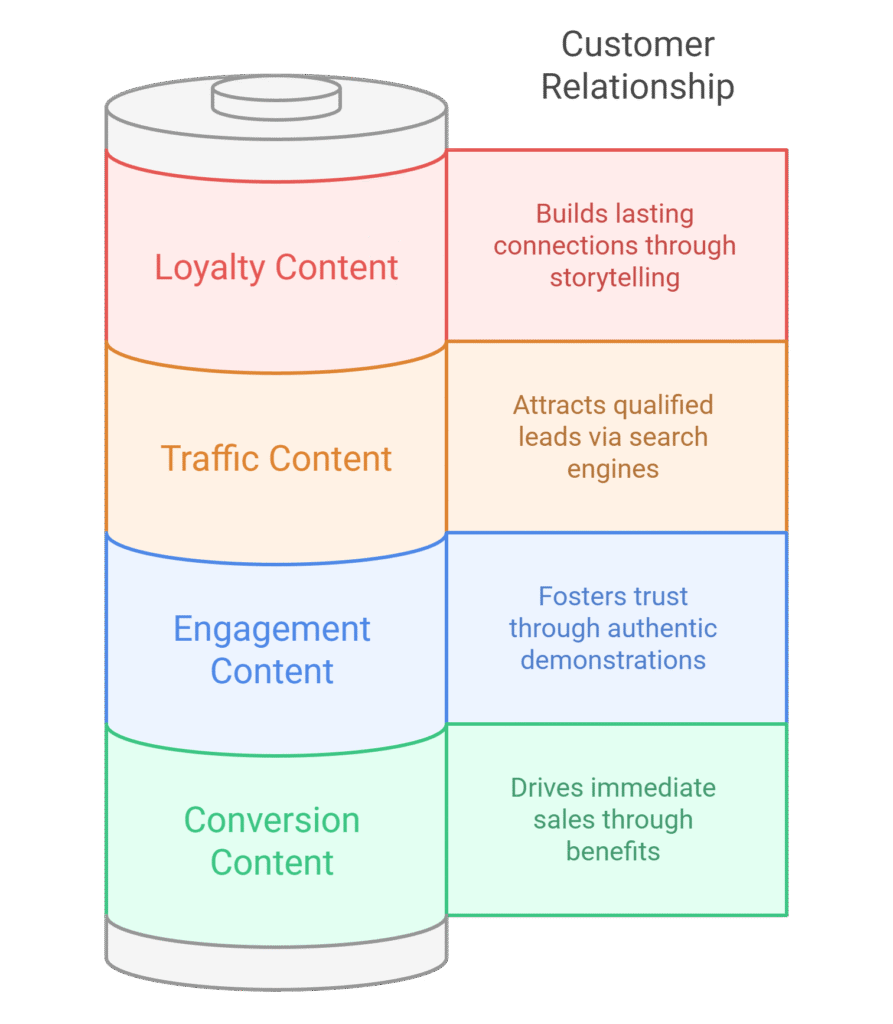
Content isn’t just words on a page, it’s your sales team working 24/7. Good content builds trust, educates customers, overcomes objections, and guides people toward conversion.
Benefit-focused copy: Features tell, benefits sell. Your AC unit isn’t “18,000 BTU with inverter technology”, it’s “Cools your 30 sqm bedroom while using 40% less electricity, saving you AED 200+ monthly on power bills.”
Always translate technical features into practical benefits for your UAE customers’ lives or businesses.
Addressing objections preemptively: Every potential customer has concerns preventing them from converting immediately. Common UAE market objections include:
- “Is this company legitimate?”
- “Will they deliver on time?”
- “Is the price fair?”
- “What if I’m not satisfied?”
- “Can they handle my specific situation?”
Address these directly in your content. Use testimonials, guarantees, case studies, FAQs, and clear policies to eliminate doubt before it becomes a reason not to buy.
Storytelling that connects: While data and features matter, stories create emotional connections. Share customer success stories, behind-the-scenes looks at your process, or founders’ stories that reveal your motivation and values.
For UAE audiences with diverse cultural backgrounds, stories that emphasize reliability, quality, and respect for customer relationships resonate particularly well.
Video content: Video builds trust faster than text. UAE customers respond well to:
- Product demonstrations
- Customer testimonial videos
- Behind-the-scenes facility tours
- Founder introduction videos
- How-to guides and tutorials
Even simple smartphone videos work if they’re authentic. Professional production is great but not always necessary, authenticity often converts better than polish. Many businesses working with a web development team in Dubai find that incorporating genuine client testimonials and behind-the-scenes content, even when filmed simply, creates stronger connections than heavily produced marketing materials.
SEO-optimized content: Creating conversion-focused content that also ranks well in search engines gives you the best of both worlds. Target keywords your UAE customers actually search for, but write for humans first, search engines second.
Local SEO matters immensely, optimize for “villa renovation Dubai,” not just “villa renovation.” Include emirate names, neighborhoods, and local landmarks naturally in your content.
What kind of proof do I need to show on my website to get more sales?
Data and social proof aren’t just nice additions, they’re conversion essentials for skeptical modern consumers.
Numbers that matter: Quantify your track record:
- “Over 2,000 UAE businesses served”
- “4.8-star rating from 500+ Google reviews”
- “98% customer satisfaction rate”
- “Average project completion: 2 weeks ahead of schedule”
Make sure these are accurate and verifiable. False claims will destroy trust faster than you built it.
Case studies and success stories: Detailed case studies showing how you solved specific problems for UAE clients are incredibly powerful. Structure them as:
- Client background and challenge
- Your solution approach
- Specific results achieved
- Client testimonial
Make them relevant to your target audience. If you serve restaurants in Dubai, showcase restaurant clients, not random unrelated industries.
Live social proof: Real-time indicators work well:
- “23 people viewing this product”
- “4 bookings made today”
- “Join 5,000+ UAE subscribers”
Just ensure these are genuine. Fake scarcity or false urgency backfires when customers discover the deception.
Awards and media mentions: Have you won industry awards? Been featured in Gulf Business, Arabian Business, or local media? Showcase these prominently. Third-party validation carries significant weight with UAE audiences.
Professional affiliations: Membership in Dubai Chamber of Commerce, Abu Dhabi Chamber, industry associations, or professional bodies adds credibility. Display relevant logos and link to verification when possible.
Should I use urgency and scarcity tactics on my website?
When used ethically, urgency and scarcity can push hesitant visitors toward action. When abused, they destroy trust. The line is thin but clear.
Legitimate urgency:
- “Ramadan special offer ends in 5 days”
- “Limited slots available for March projects”
- “Sale ends when current stock sells out”
- “First 20 customers get free installation”
Fake urgency (avoid):
- Permanent countdown timers that reset
- “Only 2 left!” when you have unlimited stock
- False deadlines with no real limitation
UAE customers are sophisticated enough to spot fake scarcity. Use these tactics only when genuinely true, and you’ll build trust while creating motivation to act now rather than later.
Seasonal opportunities: UAE has distinct seasons and events perfect for legitimate urgency:
- Ramadan and Eid promotions
- DSS (Dubai Summer Surprises) and GITEX offers
- Back-to-school periods
- National Day specials
- Summer preparation (AC maintenance before May, etc.)
These create natural, credible urgency that UAE audiences understand and respond to.
What features does my online store need to increase sales?
If you’re selling products online in UAE, additional elements become critical:
Multiple payment options: UAE customers want choice. Offer:
- Credit/debit cards (Visa, Mastercard)
- Digital wallets (Apple Pay, Google Pay)
- Cash on delivery (still popular in UAE)
- Buy now, pay later options (Tabby, Postpay)
- Bank transfers for larger purchases
More options = more conversions. The customer who won’t use a credit card might happily do cash on delivery.
Clear shipping information: Before checkout, display:
- Shipping costs (or free shipping threshold)
- Delivery timeframes for different emirates
- Tracking availability
- Return and exchange policy
Uncertainty about these factors causes cart abandonment. Remove the uncertainty, increase conversions.
Product information depth: UAE online shoppers research thoroughly before buying. Provide:
- Multiple high-quality images (zoom capability)
- Detailed specifications
- Sizing guides with local measurements
- Videos showing product in use
- Related products and comparisons
- Customer Q&A section
Security and trust during checkout: Make customers feel safe:
- Display security badges and SSL certificate indicators
- Show accepted payment logos
- Offer guest checkout (don’t force account creation)
- Clearly state privacy policy
- Provide immediate order confirmation
Cart abandonment recovery: Many UAE shoppers add items to cart but don’t complete purchase. Combat this with:
- Exit-intent popups offering assistance
- Email reminders about abandoned carts
- Limited-time discount codes to encourage completion
- Saved carts accessible from any device
How do I test and improve my website’s conversion rate?
Here’s a truth many UAE businesses miss: conversion optimization isn’t a one-time project. It’s an ongoing process of testing, measuring, and improving.
What to test:
- Headline variations
- CTA button colors and text
- Form field numbers and types
- Page layouts and content order
- Images and videos
- Pricing displays
- Trust badge placements
How to test effectively: Use tools like Google Analytics, Hotjar, or Microsoft Clarity to understand user behavior. Where do people drop off? Which pages have high bounce rates? Where do they spend time?
For significant changes, run A/B tests: show version A to half your visitors, version B to the other half, and measure which converts visitors into paying customers better. Even small improvements (a 0.5% conversion rate increase) compound significantly over time.
UAE-specific testing considerations:
- Test Arabic vs. English user behavior separately
- Compare performance across different emirates
- Test mobile vs. desktop conversion paths
- Analyze conversion rates for different traffic sources
Measure what matters: Vanity metrics (page views, time on site) are interesting but don’t pay bills. Focus on:
- Conversion rate (% of visitors who complete desired action)
- Average order value (for e-commerce)
- Cost per acquisition (how much to get one customer)
- Customer lifetime value (total value of a customer relationship)
What mistakes are killing my website conversions?
Let me save you time and money by calling out the most common mistakes I see UAE businesses making:
Auto-playing videos with sound: Nothing irritates visitors faster. If you use videos, make them click-to-play.
Aggressive popups: Showing a newsletter popup before someone has even read your homepage is intrusive. Let them explore first.
Poor Arabic translation: If you offer Arabic content, invest in professional translation. Bad Arabic translation suggests low quality throughout.
Hidden contact information: Making customers hunt for how to reach you suggests you don’t want to be contacted. Put contact info prominently in headers and footers.
Complicated checkout: Every additional step in your checkout process loses customers. Streamline ruthlessly.
Unclear pricing: “Contact us for pricing” frustrates customers who want to self-qualify before reaching out.
Broken links and errors: 404 errors, broken forms, or non-functioning features signal unprofessionalism and kill trust instantly.
No mobile optimization: I can’t emphasize this enough. If your site doesn’t work perfectly on mobile, you’re losing most UAE traffic.
How do I build a website that actually converts visitors into paying customers?
If you’re building a new website or redesigning, here’s your conversion optimization checklist:
Define clear conversion goals: What specific actions do you want visitors to take? Build your site around these goals.
Research your UAE audience: Understand their pain points, language preferences, device usage, and buying behavior.
Plan user journeys: Map out the ideal path from landing page to conversion for different visitor types.
Prioritize page loading speed: Set a target of under 2 seconds on mobile, under 1 second on desktop.
Design mobile-first: Start with mobile layouts, then expand to desktop, not the other way around.
Create compelling, benefit-focused content: Write for your customer, not about yourself.
Build in trust elements: Reviews, testimonials, certifications, guarantees from the foundation.
Simplify everything: Every element on every page should either support conversion or be removed.
Test before launch: Verify every form, button, link, and feature works flawlessly on multiple devices and browsers.
Plan for ongoing optimization: Budget for regular updates, testing, and improvements.
The Bottom Line for UAE Businesses
Converting visitors into customers isn’t about tricks or hacks. It’s about understanding human psychology, removing friction, building trust, and making it easy for people to take action.
Your website should answer three questions within seconds:
- What do you offer?
- Why should I trust you?
- What should I do next?
Get these right, optimize continuously, and your website will become your best sales representative, working around the clock to grow your UAE business.
The difference between a website that generates AED 10,000 monthly revenue and one that generates AED 100,000 often isn’t the design budget, it’s the conversion optimization. The best investment you can make isn’t in aesthetics; it’s in understanding your customers and eliminating everything that stops them from becoming buyers. Quality website development services Dubai should focus not just on how your site looks, but on how effectively it turns visitors into paying customers.
Frequently Asked Questions
What is a good conversion rate for a business website in UAE?
Conversion rates vary significantly by industry, traffic source, and conversion goal, but here are realistic benchmarks for UAE businesses: Service-based businesses typically see 2-5% conversion rates (contact forms or calls), e-commerce sites average 1-3% (completed purchases), and B2B websites often achieve 3-8% (qualified leads). If your rate is below 1%, there’s definitely room for improvement. Focus first on the fundamentals: page load speed, mobile optimization, clear CTAs, and trust signals. Remember that a 2% conversion rate means 98% of visitors leave without converting, small improvements here create significant business impact.
How long does it take to see conversion improvements after optimizing a website?
Some changes show impact immediately, while others require time to accumulate sufficient data. Quick wins (within 1-2 weeks) include improving page load speed, fixing broken elements, clarifying CTAs, and adding prominent contact information. These fundamental fixes often boost conversions 10-30% right away. Medium-term improvements (1-3 months) come from content optimization, trust-building elements, and A/B testing different approaches. Significant long-term gains (3-6 months) emerge from ongoing testing, SEO improvements bringing better-qualified traffic, and refining your value proposition based on customer feedback. The key is to start measuring immediately, so you have baseline data to compare against when implementing changes.
Should I focus on getting more traffic or converting existing traffic better?
For most UAE businesses, conversion optimization provides better ROI than simply increasing traffic. Here’s why: if you’re currently getting 1,000 visitors monthly with a 1% conversion rate, you’re getting 10 customers. Doubling your traffic costs money (ads, SEO, etc.) and gives you 20 customers. But improving your conversion rate to 3% gives you 30 customers from the same traffic, better results with no increase in traffic acquisition costs. The smartest approach is to optimize conversion first, then scale traffic once you’ve proven your site converts visitors into paying customers well. Sending more traffic to a poor-converting website just wastes your marketing budget. Fix the conversion fundamentals first, then increase traffic to a website that’s proven to converts visitors into paying customers effectively.
What’s the most important element for conversion: design, content, or functionality?
They’re interconnected, but if forced to prioritize for UAE businesses, functionality trumps everything. A beautiful site that loads slowly or has broken forms converts visitors into paying customers poorly. A gorgeously designed site with weak content fails to persuade. However, a simple-looking site that loads instantly, communicates value clearly, and makes taking action effortless can convert exceptionally well. Think of it as a hierarchy: functionality must work perfectly (fast loading, mobile-responsive, no broken elements), content must communicate value and build trust effectively, and design should enhance rather than distract from these goals. Many UAE businesses over-invest in design aesthetics while neglecting the fundamentals of fast loading, clear messaging, and friction-free conversion paths. Start with the foundation, make it work flawlessly, then layer on compelling content and appealing design.
How can I test what’s stopping visitors from converting on my website?
Start with Google Analytics to identify where visitors drop off, which pages have high bounce rates, where people exit your site, and how conversion funnels perform. Install heatmap tools like Hotjar or Microsoft Clarity to see where people click, how far they scroll, and watch session recordings of real user behavior. These often reveal friction points you’d never notice yourself, buttons users can’t find, forms they abandon halfway through, or content they ignore completely. Conduct user testing by asking 5-10 people from your target UAE audience to complete a task on your site while thinking aloud. Their struggles reveal conversion barriers. Check your site on multiple devices (iPhone, Android phones, tablets) since issues often appear device-specific. Finally, directly ask customers who did convert what almost stopped them, and ask non-converters (if you can reach them) what held them back. Real user feedback beats assumptions every time.
Do I need to hire a conversion optimization specialist or agency?
It depends on your situation. If you have basic analytics skills and time to learn, you can handle fundamental improvements yourself: fixing page speed, improving mobile experience, clarifying CTAs, and adding trust elements. Free resources and tools are abundant. However, hire specialists if you’re running e-commerce with significant traffic (1,000+ monthly visitors), spending substantial amounts on advertising where conversion improvements directly impact ROI, lack time or technical skills to implement changes yourself, or want to scale quickly and need proven expertise. For UAE businesses, agencies familiar with local market nuances (bilingual optimization, local payment preferences, cultural considerations) provide added value beyond just conversion tactics. A good specialist pays for themselves through improved results, but start with low-hanging fruit yourself before investing in expensive optimization consulting.