
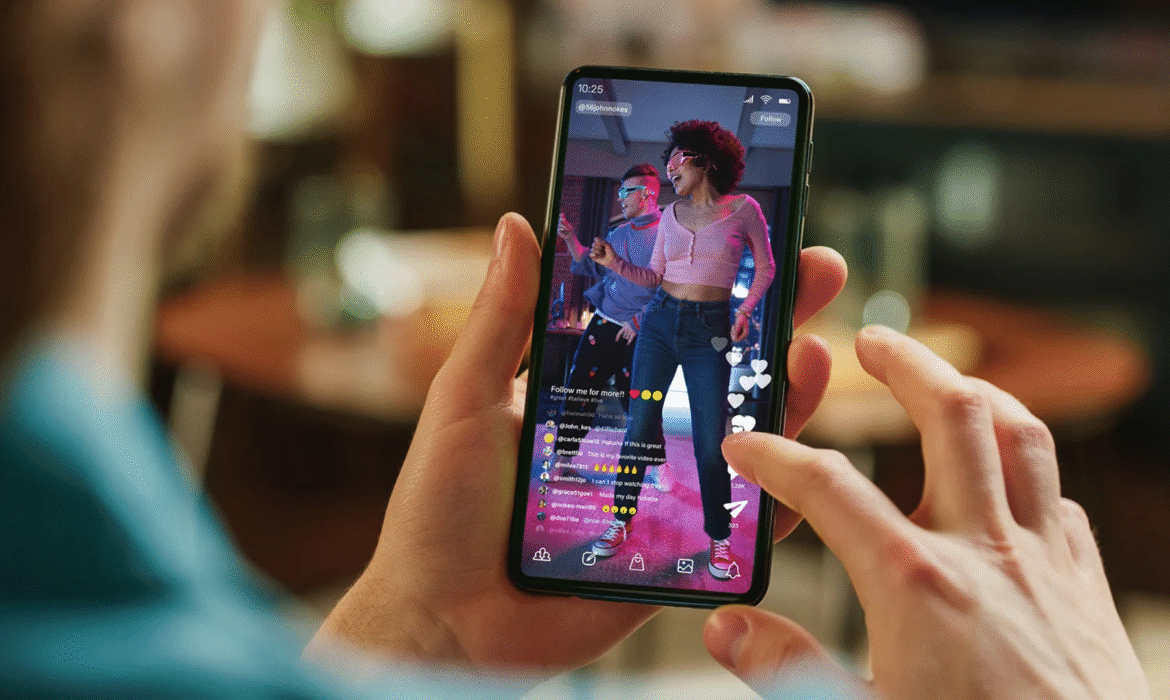
You’ve seen it happen. A 30-second video blows up overnight, racks up hundreds of thousands of views, and suddenly a brand nobody heard of yesterday is everywhere today. Meanwhile, your carefully crafted video gets 47 views (and 12 of those are probably you refreshing the page).
Here’s the truth most UAE businesses don’t realize: viral videos aren’t lucky accidents. They’re strategic combinations of psychology, timing, and platform understanding. But here’s the better news: going viral doesn’t matter nearly as much as generating leads. A video with 10,000 views and 50 quality leads beats a million-view video with zero conversions every single time.
For businesses in Dubai, Abu Dhabi, and across the Emirates, short-form video has become the fastest path to visibility. With UAE internet users spending an average of 3 hours daily on social media, the opportunity is massive. The challenge? Creating content that stops the scroll AND moves people toward your business.
This guide breaks down exactly how to create short-form videos that don’t just entertain but convert viewers into customers.
What makes a short-form video actually go viral?
The algorithm doesn’t care about your production budget. It cares about one thing: watch time. If people watch your entire video and immediately rewatch it, share it, or comment on it, the platform pushes it to more people. Simple as that.
But getting people to watch requires understanding the first three seconds. Studies show you have exactly 1.3 seconds before someone scrolls past your content. That’s not even enough time to finish reading this sentence out loud.
Successful viral videos in the UAE market typically use one of these proven hooks: asking a provocative question that creates curiosity, showing an unexpected visual that breaks pattern recognition, making a bold claim that demands attention, or starting with the result before explaining the process.
Take a real example from a Dubai-based real estate company. Instead of starting with “Welcome to our property tour,” they opened with “This apartment rents for 120,000 AED a year and doesn’t have a kitchen.” Immediate curiosity. Why doesn’t it have a kitchen? The video explained it was a commercial space perfectly suited for restaurants. That hook generated 340,000 views and 23 qualified inquiries in one week.
The content structure matters just as much. Your video needs conflict or tension (a problem people recognize), transformation (showing the solution), and a clear next step (what to do with this information). If your video feels like it’s going nowhere, viewers leave. If it pays off the promise from the hook, they engage.
How do you optimize video content for different platforms?
Instagram Reels, TikTok, and YouTube Shorts might look similar, but they reward different content strategies. Treating them all the same is like using the same sales pitch for a 22-year-old student and a 55-year-old CEO.
TikTok prioritizes raw, authentic content. The algorithm actually punishes overly polished videos that feel like traditional ads. A study of 100,000 TikTok videos found that user-generated style content gets 2.3 times more engagement than professional productions. For UAE businesses, this means your iPhone footage of behind-the-scenes moments often outperforms your expensive brand video.
Instagram Reels favors aesthetically pleasing content with trending audio. The platform’s user base in the UAE skews slightly older and more affluent than TikTok, making it ideal for premium services, real estate, and lifestyle brands. Reels also benefit from cross-promotion through Instagram Stories and the main feed, giving them longer visibility windows.
YouTube Shorts works differently. It rewards educational content and leverages your existing subscriber base. A Shorts video can drive viewers to your longer YouTube content, making it perfect for service-based businesses that need to build trust. Dubai-based consultants and agencies see particularly strong performance here because viewers actively search for expertise.
Platform-specific optimization means adjusting your captions, hashtags, and posting times. UAE businesses should post Reels between 7-9 PM when engagement peaks. TikTok sees highest activity during lunch hours (1-2 PM) and after 8 PM. YouTube Shorts performs consistently throughout the day but spikes during weekend mornings.
What type of content actually converts viewers into leads?
Entertainment gets views. Education builds trust. Trust generates leads. The sweet spot is educational content delivered in an entertaining format.
Problem-solution videos consistently outperform pure entertainment for lead generation. A Dubai-based pest control company created a 45-second video showing “three signs you have a termite problem most homeowners miss.” No sales pitch, just value. The video generated 89 direct inquiry calls in two weeks because it positioned them as experts while highlighting a problem their audience didn’t know they had.
Tutorial and how-to content works especially well in the UAE market where DIY culture is growing. A furniture store in Sharjah posted quick assembly tips and styling ideas instead of product showcases. Their “how to arrange a small bedroom in Dubai apartments” video got 156,000 views and drove 34 furniture purchases, with customers specifically mentioning they bought because the brand helped them first.
Behind-the-scenes content humanizes your brand while demonstrating expertise. People buy from people, not logos. An Abu Dhabi restaurant showed their chef selecting ingredients at the fish market at 5 AM, explaining what to look for in fresh seafood. The video built credibility that translated into reservations from people who wanted to experience that level of care.
The key to conversion is the call-to-action. Subtle but clear. “Link in bio for free consultation” works better than “buy now.” “Comment GUIDE for our free PDF” creates engagement that boosts algorithmic reach while capturing leads. “Tag someone who needs to see this” extends your reach organically.
How should you structure videos specifically for lead generation?
Lead-generating videos follow a specific framework that differs from pure brand awareness content. The structure needs to create desire, establish authority, and remove friction from the next step.
Start with the transformation, not the process. “We helped this Dubai startup get 50,000 Instagram followers in 90 days” is stronger than “Here’s our social media strategy.” Lead with results because results create desire.
The middle section should demonstrate expertise without giving away everything. Think of it as a trailer for your service. A digital marketing agency might show three quick optimization techniques that improved a client’s website traffic, but save the detailed implementation strategy for paying clients. You’re proving you know what you’re doing while leaving room for professional help.
End with a friction-free next step. “DM us GROW for a free audit” is easier than “visit our website, fill out the contact form, wait for our response.” Lower the barrier. One Dubai-based business coach used “Reply with your biggest business challenge” as her CTA. She got 200+ responses because it felt like a conversation, not a transaction.
Urgency works when it’s genuine. “We’re taking 5 new clients this month” creates scarcity without being pushy. “50% off if you book today” feels desperate. UAE consumers respond well to exclusivity and limited availability but are increasingly skeptical of artificial urgency.
What role does trending audio and hashtags play in reach?
Trending audio acts like a distribution multiplier. When you use a sound that’s currently popular, the platform tests your video with a broader initial audience because trending sounds indicate timely, relevant content.
But here’s the nuance: trending audio needs to match your content. Forcing a trending sound onto unrelated content confuses viewers and hurts watch time. A corporate law firm shouldn’t use a comedy audio trend unless they can make it genuinely relevant to their message.
For UAE-specific content, mixing English and Arabic hashtags expands reach across both demographics. A video about Dubai real estate should include both #DubaiRealEstate and #عقارات_دبي to capture the full local audience. Research shows bilingual hashtag strategies in the UAE increase average reach by 43% compared to English-only tags.
Hashtag strategy follows a 70-20-10 rule: 70% niche-specific hashtags that your target audience follows, 20% broader industry hashtags for discovery, and 10% trending or high-volume hashtags for algorithmic boost. A bakery in Dubai might use #DubaiBakery, #DubaiFoodie, and #CustomCakes (niche), #UAEFood and #DubaiBusiness (broader), and whatever food trend is currently viral (trending).
The number matters too. TikTok performs best with 3-5 highly relevant hashtags. Instagram Reels can handle 8-12. YouTube Shorts uses hashtags less prominently but benefits from detailed descriptions with keyword-rich text.
How do you maintain consistency without burning out your team?
Content creation fatigue kills more video strategies than lack of ideas. The businesses winning at short-form video have systems, not hustle.
Batch creation is non-negotiable. Set aside one day monthly to film 20-30 videos. Change your shirt, rearrange the background slightly, and knock out multiple pieces of content in one session. A financial advisor in Abu Dhabi films all his monthly content in a 4-hour Sunday morning session. That single time investment generates daily content for 30 days.
Content buckets solve the “what should I post” problem. Create 4-5 repeatable categories that align with your business goals. A gym might rotate between workout tips, nutrition advice, member transformations, myth-busting, and motivational content. You’re not creating from scratch each time, you’re filling predetermined buckets.
Repurposing multiplies your effort. One long client success story becomes: a 60-second case study video, a carousel post with key stats, a before/after comparison video, three quote graphics, and two educational tips derived from the project. One piece of source material generates a week of content across platforms.
UAE businesses often overlook user-generated content as a consistency tool. Encourage customers to tag you, then reshare their content (with permission). A Dubai coffee shop reposts customer photos and videos, creating authentic content that requires zero creation effort while building community.
Templates and frameworks speed up production. Create 3-4 video templates (intro animation, text overlay style, outro branding) that you reuse with different content. This builds brand recognition while eliminating design decisions from every video.
What metrics actually matter for measuring lead generation success?
View count is vanity. Lead count is sanity. Revenue is reality. Most businesses obsess over the wrong numbers.
The metrics that actually predict lead generation are watch time percentage (how much of your video people watch), saves and shares (indicators of high-value content), profile visits after viewing (interest in your business), and link clicks or DM responses (direct lead actions).
A video with 5,000 views, 78% average watch time, and 34 profile visits is outperforming a video with 50,000 views, 23% watch time, and 12 profile visits. The first audience is engaged and interested. The second audience scrolled past after three seconds.
For UAE businesses, tracking geographic data reveals whether you’re reaching your actual market. A video with 100,000 views from the Philippines doesn’t help a Dubai-based service business. Platform analytics show viewer locations, letting you optimize content for your actual target audience.
Cost per lead tells you what’s working. If you’re running paid promotion behind your videos, divide your spend by qualified leads generated. A video that costs 500 AED in promotion and generates 10 qualified leads has a 50 AED cost per lead. Compare that against your other marketing channels to determine where to invest more.
Attribution tracking connects videos to actual revenue. Use unique discount codes, dedicated landing pages, or specific email addresses in your CTAs. When someone books a service, ask how they found you. You’ll discover which videos are actually driving business, not just engagement.
How much should you invest in production quality?
Here’s what UAE businesses get wrong: they either spend 20,000 AED on a single professional video that feels like an ad, or they post blurry, poorly lit iPhone footage that looks careless. The sweet spot is in between.
Minimum viable quality means good lighting, clear audio, and stable footage. You don’t need a film crew. You need a 300 AED ring light, a phone tripod, and a quiet room. The difference between amateur and professional isn’t equipment cost, it’s attention to these basics.
That said, certain industries benefit from higher production. Real estate videos need high-quality footage because you’re selling premium properties. A cleaning service can thrive with simple before-and-after content. Match your production level to your audience expectations and pricing.
The 80-20 rule applies perfectly here. 80% of your content should be quick, authentic, value-driven videos you create in-house. The remaining 20% can be higher-production cornerstone content that showcases your best work. A Dubai-based interior designer might post daily quick tips on her iPhone but invest in one professional project showcase monthly.
Consider hybrid approaches. Film on your phone but pay a freelance editor 200 AED per video to add professional touches like text animations, color grading, and branded outros. This gives you professional-feeling content without professional-level costs.
What are the biggest mistakes that kill video performance?
Starting with your logo and brand intro is the fastest way to get scrolled past. Nobody cares about your brand in the first three seconds. They care about what’s in it for them. A 5-second logo animation at the start of a 30-second video means you’ve lost 20% of your audience before delivering any value.
Talking too slowly wastes precious seconds. The pace of short-form video should feel energetic. Watch your footage back at 1.5x speed. If it still feels engaging, your pacing is right. If it feels frantic, slow down slightly. But most businesses talk too slowly, assuming viewers need time to process. They don’t. They need momentum.
Poor audio quality kills credibility faster than poor video quality. People will watch grainy footage if the information is valuable, but they won’t tolerate audio that’s hard to understand. Background noise, echo, or muffled sound makes you seem unprofessional. A 200 AED lavalier microphone solves this problem completely.
Ignoring the caption opportunity is leaving reach on the table. 85% of social media videos are watched without sound. If your video requires audio to make sense, you’ve lost most of your audience. Add text overlays for key points or full captions for accessibility and algorithm benefits.
Making every video a sales pitch destroys trust. The ratio should be 80% value-driven content, 20% promotional. If every video ends with “call us now,” your audience learns to scroll past because they know you’re always selling. But if 8 out of 10 videos help them genuinely, that 9th video with a CTA feels like a natural next step.
Conclusion
Creating viral short-form videos that generate leads isn’t about luck or trends. It’s about understanding platform algorithms, knowing your audience’s pain points, and delivering value in the most engaging format possible.
The UAE market presents unique opportunities for businesses willing to invest in video content. With high social media usage, a diverse multilingual audience, and growing digital adoption across industries, the potential reach is enormous. But reach without conversion is just noise.
Start with consistency over perfection. Post 4-5 videos weekly with decent quality and clear value. Track what resonates with your specific audience in your specific niche. Double down on what works. Eliminate what doesn’t.
Remember that lead generation through video is a compound effect. Your first ten videos might generate two leads. Your next fifty might generate thirty. Your hundredth video benefits from the authority and audience you’ve built with the previous 99. This is a long game that rewards persistence and strategy over one-off viral attempts.
The businesses winning at short-form video in the UAE right now aren’t the ones with the biggest budgets. They’re the ones with the clearest strategy, the most consistent execution, and the deepest understanding of their audience’s needs.
FAQs
How long should short-form videos be for best lead generation results?
The optimal length is 30-60 seconds for most business content. This gives you enough time to present a problem, hint at a solution, and include a clear call-to-action without losing viewer attention. Videos under 30 seconds often feel too rushed to build trust, while videos over 60 seconds see dramatic drop-offs in completion rates. Test both ends of this range with your specific audience to find your sweet spot.
Do I need to show my face in videos to generate leads?
Not necessarily, but face-to-camera videos typically build trust faster, especially for service-based businesses. People buy from people they feel they know. That said, successful alternatives include screen recordings with voiceover for tech products, text-based videos for quick tips, and product demonstrations for physical goods. If you’re uncomfortable on camera, start with voiceover content and gradually work toward showing your face as you get comfortable.
How often should I post short-form videos to see results?
Minimum three times weekly for momentum, ideally 5-7 times for optimal algorithm performance. Consistency matters more than frequency. Posting daily for two weeks then disappearing for a month trains the algorithm to deprioritize your content. A sustainable three-videos-per-week schedule maintained for six months will outperform sporadic daily posting every time.
Can I use the same video across TikTok, Instagram Reels, and YouTube Shorts?
Yes, but optimize for each platform. Remove watermarks (TikTok logo on Instagram content gets suppressed), adjust captions for platform culture, and consider reformatting aspect ratios if needed. Some content performs well everywhere, while other videos need platform-specific versions. Test cross-posting first, then create unique content for platforms where you see the strongest engagement.
How long does it take to start generating leads from short-form video?
Most UAE businesses see initial leads within 30-45 days of consistent posting, but meaningful lead flow typically begins around the 90-day mark. This timeline assumes you’re posting valuable content 3-5 times weekly, engaging with your audience, and testing different CTAs. The first month builds your content library and algorithm trust. The second month starts attracting your target audience. The third month is when conversion momentum picks up.
Should I use paid promotion to boost my videos?
Organic growth should come first. Master creating content that naturally engages your target audience before spending money on promotion. Once you identify videos that perform well organically (high engagement rate, strong watch time, profile visits), allocate 200-500 AED to boost those proven winners. Paid promotion amplifies what already works, it doesn’t fix content that doesn’t resonate.